+86-20-86215789 service@adhesive-dy.com

Views: 0 Author: Site Editor Publish Time: 2026-07-31 Origin: Site
High-volume manufacturing and assembly operations frequently hit a hard bottleneck: waiting on slow-curing adhesives. When production lines pause for adhesives to reach handling strength, throughput drops. Failing to achieve immediate, high-strength green bonds—initial tack—leads to delayed cycles, material shifting, and increased labor. Low initial adhesion causes immediate spring-back failures in tensioned joints. Think of curved foam bonding or wrapped fabric panels. If the bond slips, you face immediate rework. Specifying the wrong adhesive chemistry for these demanding applications guarantees joint failure under handling stress.
Styrene-Butadiene-Styrene (SBS) block copolymers provide an engineered solution for rapid tack development. By utilizing specific polymer morphologies and tailored solvent blends, these adhesives eliminate mechanical clamping and accelerate assembly. This guide breaks down the chemical mechanics, application variables, and technical trade-offs of SBS formulations to inform your engineering decisions.
Polymer Mechanics: SBS contact adhesives utilize a thermoplastic elastomer structure that provides immediate cohesive strength as soon as the solvent begins to flash off.
Solvent Engineering: Fast initial tack is controlled by precise solvent blends (e.g., MEK, acetone, heptane) that dictate the open time and optimal bonding window.
Application Efficiency: Utilizing a sprayable SBS contact adhesive accelerates coverage and solvent evaporation, making it highly scalable for large surface area bonding.
Immediate Green Strength vs. Curing: Unlike reactive systems (UV, heat, or moisture-curing), SBS relies on physical solvent evaporation, delivering instantaneous green strength without cure-time bottlenecks.
Operational Trade-offs: While SBS excels in rapid tack, flexibility, and low-temperature performance, it must be evaluated against Neoprene for applications requiring extreme heat or chemical resistance.
The performance of an SBS contact adhesive is rooted in its unique two-phase morphology. The polymer chain consists of hard polystyrene end-blocks and soft polybutadiene mid-blocks. The polystyrene domains provide structural strength, rigidity, and load-bearing capacity. Conversely, the polybutadiene segments impart high flexibility, elasticity, and tack. At room temperature, this thermoplastic elastomer behaves remarkably like a vulcanized rubber. It achieves this state without requiring a complex chemical cross-linking cure cycle. The physical entanglement of the polystyrene domains creates a strong network that holds the flexible mid-blocks together, delivering immediate structural integrity. When you apply this to a substrate, the molecular structure does the heavy lifting instantly.
In practical terms, this means you do not have to wait for a chemical reaction to take place. The polymer is already fully formed within the solvent carrier. As soon as that carrier leaves the system, the polymer reverts to its solid, elastomeric state. This is why SBS systems are heavily favored in industries where line speed dictates profitability. You get the strength of a cured rubber compound simply by letting a liquid dry.
Once the solvent carrier has fully evaporated, the physical properties of the SBS block copolymer chain impart permanent resistance to wear, tear, and surface abrasion. The robust nature of the polystyrene blocks ensures that the adhesive film maintains its cohesive strength over time. Because the polymer does not rely on ongoing chemical reactions that might degrade under environmental stress, the dried film remains stable. This inherent durability makes the adhesive highly effective for applications subjected to continuous dynamic movement or vibration, such as seating in commercial vehicles or heavy-duty acoustic paneling.
We often see failures in lesser adhesives when subjected to repeated flexural stress. The adhesive film becomes brittle and cracks. The polybutadiene mid-blocks in an SBS formulation prevent this. They act as microscopic shock absorbers within the glue line. Even after years of service, the bond retains its elastomeric properties, stretching and recovering alongside the substrates it holds together.
Fast initial tack depends heavily on the solvent package used to carry the polymer. Fast-evaporating solvents, such as acetone and Methyl Ethyl Ketone (MEK), rapidly deposit the polymer onto the substrate. As these solvents flash off, the adhesive quickly transitions from a liquid to a tacky film. Relying solely on fast solvents can cause rapid cooling of the surface, drawing moisture from the air and causing "blushing"—a condition that ruins bond strength. To prevent this, formulators include slower-evaporating solvents like heptane. This carefully engineered blend controls the open time, prevents moisture condensation, and ensures a reliable tack window across varying ambient conditions.
You have to match the solvent blend to your shop conditions. If you are spraying in a facility that sits at 90°F with high airflow, a highly volatile solvent package will flash off before the adhesive even hits the substrate, resulting in dry spray. Conversely, in a 60°F shop, that same blend might take ten minutes to reach tack. Understanding the evaporation curve of the specific solvents in your adhesive allows you to adjust your application technique and timing accordingly.
Understanding tack requires contrasting the physical drying mechanism of SBS with reactive chemistries. Moisture-curing, heat-curing, and UV-curing adhesives require a chemical cross-linking reaction to build strength, which inherently takes time. SBS systems rely entirely on physical solvent evaporation. As the solvent leaves the system, the polymer chains immediately entangle and lock together. This physical transition yields significantly higher instant green strength relative to systems that must undergo time-delayed chemical reactions, allowing for immediate handling of bonded assemblies.
Consider a polyurethane adhesive. It requires ambient moisture to initiate a cure. You apply it, mate the parts, and then you must clamp them mechanically while the chemical reaction slowly builds the polymer network. With SBS, the network is already there. You are simply removing the liquid that keeps it fluid. Once the liquid is gone, the strength is present. This fundamental difference dictates how you design your assembly line workflow.
For an adhesive to grip a surface, it must first wet it out completely. The low surface tension of the liquid adhesive allows it to flow over and penetrate porous substrates like foam, wood, and fabric. On non-porous surfaces such as metals and plastics, the adhesive flows into microscopic surface irregularities. This mechanical interlocking is critical. When the solvent evaporates, the polymer is left firmly anchored within the substrate's micro-roughness, establishing the foundation for a high-strength bond.
The liquid adhesive contacts the substrate and lowers its surface tension.
Solvents carry the polymer chains deep into the pores or micro-abrasions of the material.
As the solvent evaporates, the polymer shrinks slightly, gripping the internal structures of the substrate.
The remaining film presents a tacky surface ready to mate with the opposing coated substrate.
The tack stage is a specific timeframe where the adhesive is dry to the touch but aggressively auto-adheres when mated to itself. Success depends on mating the substrates within this critical window. If mated too early, solvent is trapped; if mated too late, the adhesive will not fuse. Temperature, humidity, and airflow directly compress or extend this window. High temperatures and rapid airflow accelerate solvent flash-off, shrinking the open time. Cold or stagnant environments extend the time required before the adhesive is ready to bond.
Managing this window requires operator discipline. You cannot simply spray a dozen parts and take a break. The parts sprayed first will likely exceed their open time before you return to mate them. Assembly must be a continuous, timed process. Operators must learn to read the adhesive film, recognizing the visual shift from a wet, glossy appearance to a dull, matte finish that indicates readiness.
Initial tack is only fully realized when adequate mechanical pressure is applied. Pressure forces the SBS polymer chains across the interface to achieve instantaneous contact fusion. Whether utilizing nip rollers, manual pressing tools, or weighted contact, the goal is to eliminate air pockets and maximize the surface area of the mated adhesive films. Without sufficient pressure, the microscopic adhesive peaks will not fully coalesce, resulting in a weak, easily compromised joint.
Hand pressure is rarely sufficient for industrial applications. A J-roller or a pneumatic nip press ensures that the pounds per square inch (PSI) required to fuse the two adhesive layers is consistently met. You are trying to force two solid rubber films to become one. That requires mechanical force to overcome the surface resistance of the dried polymer.
The physical mechanism of the bond relies on phase separation. As the solvent evaporates, the polystyrene domains begin to aggregate and associate with one another. This instant locking of the polymer chains creates a flexible, high-strength film. The rapid formation of these physical cross-links is what provides the immediate cohesive strength capable of withstanding handling stresses and resisting the spring-back forces of tensioned materials.
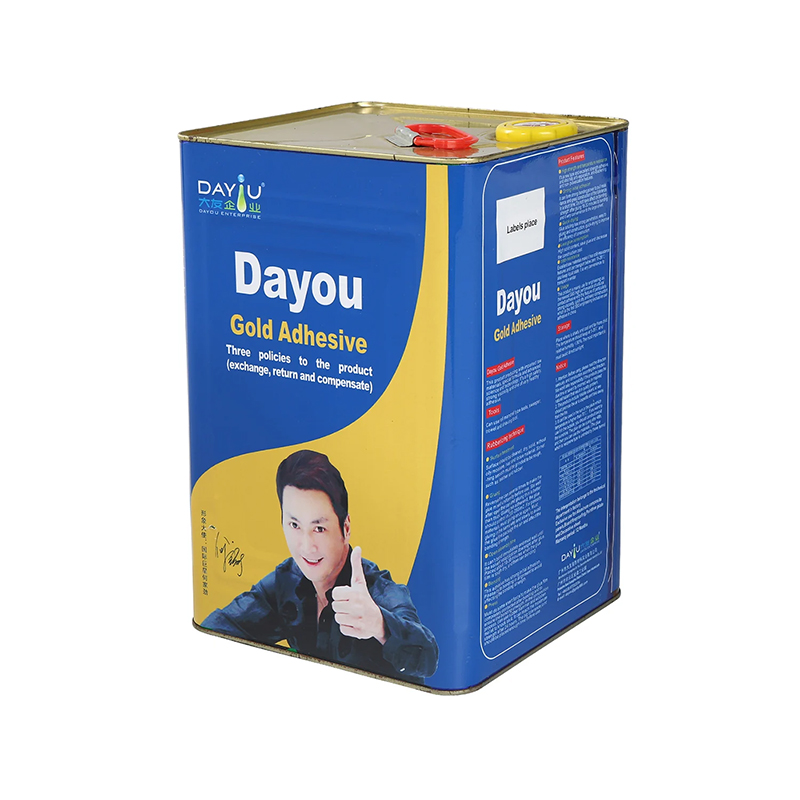
When selecting a general purpose contact adhesive, engineers often compare SBS to Neoprene. SBS generally develops tack much faster than Neoprene, streamlining rapid assembly lines. Performance trade-offs exist. Neoprene offers superior high-temperature stability and excellent oil and chemical resistance. SBS provides better low-temperature flexibility, higher initial grab, and often a more favorable cost profile. The choice depends strictly on the thermal and chemical exposures expected in the end-use environment.
If you are bonding laminate to a countertop that will sit in a residential kitchen, Neoprene is often the standard due to its heat resistance. If you are bonding acoustic foam inside a speaker cabinet or assembling office partitions, SBS is the superior choice. It grabs faster, holds the foam without degrading the cells, and keeps the line moving.
Polyurethane adhesives build exceptional ultimate structural strength through a moisture-curing chemical reaction. This reaction requires extended clamping times. The physical drying mechanism of SBS eliminates the need for clamping and the long cure times associated with PU. While PU may ultimately provide a stronger, more rigid bond suitable for structural load-bearing, SBS is vastly superior for applications requiring immediate handling and flexible bond lines.
You use PU when the joint must hold structural weight, like bonding fiberglass panels to a steel frame on a trailer. You use SBS when you are wrapping that same panel in a decorative fabric. The applications do not overlap; they serve entirely different mechanical requirements.
Decision frameworks should be based on the specific end-use application. SBS is the optimal specification for foam fabrication, HVAC insulation, upholstery, and acoustic paneling where rapid assembly and flexibility are paramount. Alternatives like Neoprene or high-temp epoxies should be specified for high-heat automotive under-hood applications or environments exposed to aggressive industrial solvents.
Adhesive Type | Initial Tack Speed | Flexibility | Heat Resistance | Primary Use Case |
|---|---|---|---|---|
SBS Contact Adhesive | Very Fast (1-5 mins) | High | Moderate (up to 160°F) | Foam, Upholstery, Insulation |
Neoprene Contact Adhesive | Moderate (5-15 mins) | Moderate | High (up to 250°F) | Automotive, High-Heat Laminates |
Polyurethane (PU) | Slow (Requires Clamping) | Low to Moderate | Very High | Structural Bonding, Rigid Panels |
Acrylic Emulsion | Very Slow (Water-based) | Moderate | Low | Low-stress interior laminating |
For high-throughput assembly lines, utilizing a sprayable SBS contact adhesive offers significant scalability advantages. Atomization through a spray gun or pressurized aerosol canister exponentially increases the surface area of the applied adhesive. This rapid exposure to air accelerates solvent flash-off and tack development. Spray systems also ensure consistent coat weights across large surface areas, reducing material waste and preventing the pooling that leads to solvent entrapment.
Setting up a spray system requires attention to fluid pressure and atomization air pressure. If your fluid pressure is too high, you deposit too much adhesive, leading to long dry times and potential solvent trapping. If your atomization pressure is too high, the solvent flashes off in the air before the adhesive hits the substrate, resulting in a dry, powdery coating that will not bond. Dialing in the gun settings is a mandatory step for consistent production.
Manual application methods are appropriate for precision edge banding, small-batch manufacturing, or complex geometries where overspray is unacceptable. Brushing or rolling often deposits thicker adhesive films. Thicker films extend open times because the solvent must migrate through a heavier layer of polymer to escape. Operators must be vigilant to avoid mating substrates too early, as the risk of solvent entrapment is significantly higher with manual application.
When rolling SBS, use a short-nap, solvent-resistant roller cover. Foam rollers will dissolve instantly in MEK or acetone-based blends. Apply the adhesive in a single, even coat. Overworking the adhesive with a brush or roller as it begins to tack up will cause it to pill and ball up, destroying the smooth film required for a tight bond line.
SBS formulations demonstrate unique resilience in suboptimal conditions. They maintain tack and bond integrity in low-temperature and high-humidity environments where other adhesives might fail or suffer from severe blushing. A prime example is outdoor display construction, such as bonding fabric or cloth to metal wire frames under varying ambient weather conditions. The ability of SBS to auto-adhere aggressively in cold or damp conditions proves its versatility over standard adhesive options.
In cold weather, the solvent evaporation slows down significantly. While a water-based adhesive might freeze and become useless, an SBS solvent-based system simply requires more open time. You can still achieve a structural bond at 40°F; you just have to wait longer for the knuckle test to confirm readiness.
Mating substrates before sufficient solvent has evaporated is a primary cause of joint failure. Trapped solvent gas will attempt to escape, leading to blistering, bubbling, and delayed cohesive failure. To mitigate this risk, operators must strictly adhere to recommended flash-off times. Utilizing the knuckle test—touching the adhesive film with the back of a knuckle to ensure it feels dry and does not transfer to the skin—is a reliable method for determining readiness.
Defect | Root Cause | Mitigation Strategy |
|---|---|---|
Blistering / Bubbling | Solvent trapped under mated substrates. | Extend open time; enforce the knuckle test before mating. |
Poor Initial Grab | Adhesive applied too thin or mated past open time. | Increase coat weight; mate parts sooner. |
Spring-back Failure | Inadequate mechanical pressure during mating. | Use a J-roller or nip press to consolidate the bond line. |
Blushing (White Film) | High humidity causing moisture condensation. | Switch to a solvent blend with slower evaporation rates. |
Joining memory-retaining materials, such as dense foams or curved laminates, introduces significant mechanical risk. The adhesive must resist immediate elastic rebound. Mitigation requires optimizing the coat weight to ensure sufficient polymer is present for a strong bond. Mating must occur precisely at peak tack density. Applying maximum mechanical pressure immediately upon contact ensures the polymer chains interlock deeply enough to withstand the tension.
When wrapping a rigid core with a high-density foam, the foam constantly fights to return to its flat state. You must apply a heavier coat of adhesive to the edges where the tension is highest. Mate the flat sections first, then roll the edges down with heavy, sustained pressure to lock the polymer chains before the foam can pull away.
Bonding highly plasticized materials, such as flexible PVC, requires caution. Over time, plasticizers can migrate from the substrate into the adhesive film, softening the SBS polymer and leading to bond degradation and eventual failure. When working with unknown or heavily plasticized substrates, rigorous testing protocols must be implemented. Accelerated aging tests can identify potential migration issues before full-scale production begins.
If you must bond flexible PVC, you generally need to move away from standard SBS formulations and look toward nitrile-based or specialized plasticizer-resistant contact adhesives. SBS will hold initially, but the bond will turn to a sticky, gummy mess within a few weeks as the plasticizers attack the polymer network.
Solvent-based systems necessitate strict adherence to safety and environmental regulations regarding Volatile Organic Compounds (VOCs). Facilities must implement robust engineering controls, including downdraft tables, fume hoods, and adequate general ventilation to protect workers from solvent vapor exposure. Procurement teams should evaluate the availability of low-VOC or compliant solvent formulations that meet regional environmental standards without compromising tack speed.
Grounding your equipment is non-negotiable. The solvents used in these adhesives are highly flammable. The friction of the fluid moving through the spray hoses generates static electricity. If the pump, hoses, and spray guns are not properly grounded, a static spark can ignite the solvent vapors. Safety protocols must include daily checks of grounding wires and ventilation airflow rates.
Audit your current assembly line to identify specific stations where clamping or drying times cause bottlenecks.
Initiate a pilot test with a technical adhesive representative to dial in the exact solvent blend and coat weight for your facility's ambient conditions.
Implement standardized knuckle-test training for all operators to eliminate solvent trapping and premature mating.
Evaluate your existing ventilation infrastructure to ensure compliance with local VOC regulations before scaling up solvent-based systems.
A: The open time generally ranges from 1 to 15 minutes. This timeframe depends heavily on the specific solvent blend, the application method used, and ambient conditions such as temperature, humidity, and airflow in the facility.
A: Sprayable versions are formulated with lower viscosity and specific solvent ratios. These adjustments allow the adhesive to atomize cleanly through a nozzle without cobwebbing, resulting in a wider spray pattern and much faster solvent flash-off.
A: While the fully cured bond is highly water-resistant, applying the adhesive in high humidity can cause blushing. The solvent blend must include slower-evaporating components to prevent moisture condensation on the adhesive surface during the drying phase.
A: Common culprits include applying the adhesive too thin or too thick, mating substrates too early (causing solvent trapping) or too late (past the open time), inadequate mechanical mating pressure, and exceptionally low ambient temperatures.
A: Yes. The polybutadiene mid-blocks within the polymer structure ensure that the cured adhesive film remains highly flexible. This makes it ideal for bonding flexible substrates like foam, fabric, and rubber without cracking under stress.
A: Operators use the standard industry knuckle test. Touch the adhesive lightly with the back of a knuckle; it should feel tacky but dry, and no adhesive should transfer to your skin. This indicates the solvent has sufficiently flashed off.


