+86-20-86215789 service@adhesive-dy.com

Views: 0 Author: Site Editor Publish Time: 2026-10-18 Origin: Site
Manufacturing facilities face a constant tension between maximizing production throughput and maintaining equipment uptime. High throughput requires fast-curing materials to move parts down the line quickly. However, maintaining equipment uptime requires sufficient working time to prevent material from clogging the machinery. This delicate balance defines the success or failure of automated dispensing operations. Mismatched material pot life and automated dispensing cycle times create severe operational bottlenecks. These mismatches lead to premature curing in static mixers, inaccurate A/B mixing ratios, and uneven mixing. Operators frequently encounter air bubble entrapment and excessive material waste. Costly machine downtime inevitably follows. Solving this requires establishing a strict technical framework. Engineers must evaluate how the specific pot life of a silicone dictates the engineering requirements of automated metering, mixing, and potting equipment. The machine architecture must match the chemical reaction rate to ensure continuous production, precise volumetric dosing, and high-quality final products.
Cycle Time vs. Pot Life: Automated dispensing is only viable when the machine's continuous cycle time is significantly shorter than the material's stated pot life, typically requiring a safety margin of at least 20-30%.
Equipment Complexity Scales with Cure Speed: Highly reactive silicones (pot life < 5 minutes) necessitate advanced equipment features like dynamic mixing heads, automated base-purge systems, and precise thermal management.
Viscosity and Ratio Accuracy: As pot life decreases, viscosity often increases rapidly; maintaining strict volumetric or gravimetric mix ratios requires robust positive displacement pumps (gear or piston) rather than time-pressure systems.
Scalability of Dispensing Systems: Equipment selection must align with production volume and material viscosity, ranging from desktop CNC glue dispensers for low-to-medium viscosity RTV silicones to fully automated in-line vacuum potting systems.
Application-Specific Demands: Structural glazing, secondary sealing, and electronics potting require distinct equipment configurations to handle varying viscosities without introducing air bubbles or compromising structural and dielectric integrity.
Defining pot life requires technical precision on the factory floor. Pot life is the exact time it takes for a mixed material to double in its initial viscosity while sitting in a static mass. Working time represents the practical window where the material remains dispensable through a specific nozzle without causing a pressure spike in the fluid lines. Snap time marks the rapid onset of the cross-linking phase where the material transitions into an unusable solid state. These three metrics dictate how a machine must handle the fluid. A material may have a laboratory pot life of twenty minutes but a working time of only twelve minutes under high mechanical shear stress inside a dispensing valve. Operators must program machine cycles based on working time, not just the data sheet pot life.
Environmental variables drastically alter these chemical timelines. Ambient temperature and factory humidity accelerate the curing process. Exothermic heat generation plays a massive role during bulk dispensing. When mixing large masses of material, the chemical reaction generates internal heat. This heat accelerates the cure from the inside out, further reducing the effective pot life. Dispensing equipment must account for these variables. Climate-controlled factory environments help stabilize the curing reaction and maintain consistent machine performance.
Ambient Factory Temperature | Theoretical Pot Life Impact | Required Machine Adjustment |
|---|---|---|
15°C (59°F) | Extended by 30-40% | Decrease purge frequency; monitor for slow cure times. |
25°C (77°F) | Baseline (Data Sheet Spec) | Standard operation; run default PLC purge timers. |
35°C (95°F) | Reduced by 50% | Increase purge frequency; shorten allowable idle time. |
40°C+ (104°F+) | Reduced by 70%+ | Mandatory climate control; high risk of mixer curing. |
Mix ratio sensitivities introduce another layer of complexity. Off-ratio mixing directly impacts pot life and final cure properties. If a machine dispenses too much catalyst, the pot life plummets. The material cures inside the static mixer before the cycle finishes. If it dispenses too little catalyst, the material never fully cures, leaving a sticky, structurally weak residue. This establishes the baseline requirement for high-accuracy, stable meter-mix equipment. Precision pumps prevent uneven mixing and ensure the chemical reaction proceeds exactly as engineered.
Materials with a pot life under five minutes present extreme challenges. These highly reactive fluids demand specialized equipment. Dynamic mixing valves are strictly required. These valves use motorized impellers spinning at high RPMs to aggressively blend the A and B components in milliseconds. Close-to-nozzle integration minimizes the volume of mixed fluid in the system. Automated solvent or base-purge systems are mandatory. If the machine pauses for even two minutes, it must automatically flush the mixing chamber. Failure to purge results in catastrophic curing within the fluid path. These setups are ideal for high-volume electronics potting and rapid assembly lines where parts move continuously.
The five to thirty-minute range represents the industry standard for most manufacturing. Equipment requirements here are straightforward and robust. Standard static mixers handle the blending process effectively without motorized agitation. Volumetric piston pumps deliver reliable, repeatable shots of material. Programmable shot-size controllers ensure consistency across thousands of cycles. Desktop CNC dispensing machines integrate well with these materials. They offer a balance of speed and manageable maintenance. Ideal use cases include general industrial sealing, low-to-medium viscosity RTV silicone dispensing, and smaller batch runs requiring high accuracy.
Long pot life materials offer maximum flexibility on the factory floor. They allow for extended processing times and complex application methods. In-line automated vacuum potting systems dominate this category. The extended working window allows trapped air to rise and escape under vacuum pressure. This ensures deep penetration and zero air entrapment. Equipment utilizes larger static mixers and longer fluid paths without the constant risk of premature curing. Ideal use cases include complex geometries, deep-section potting, high-voltage electrical insulation, and specialty mold making.
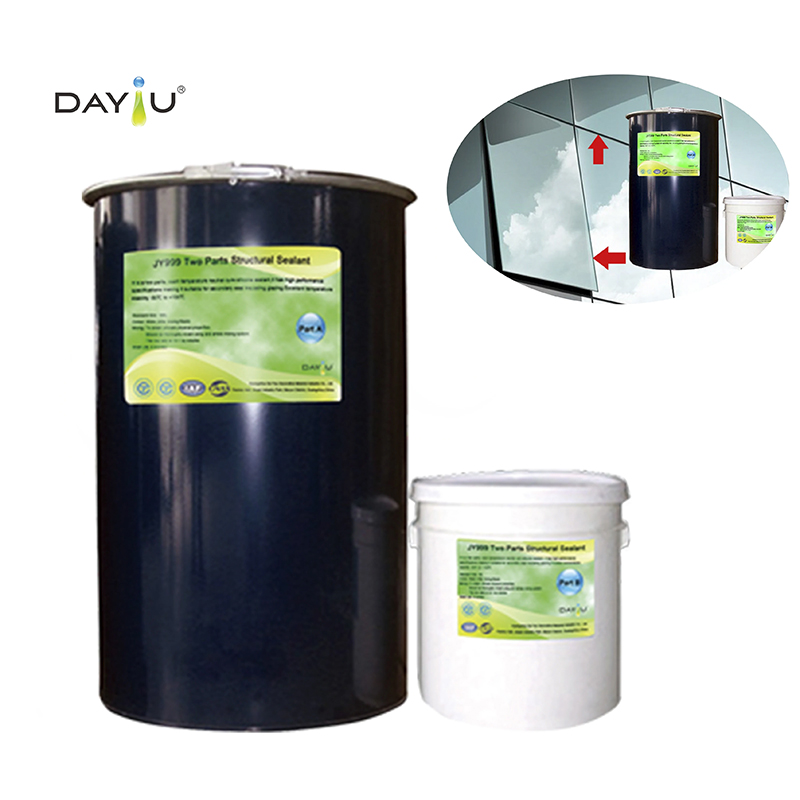
Structural glazing requires high-strength, high-viscosity materials. A two part structural glazing sealant exhibits heavy thixotropic behavior. It resists flow until mechanical shear is applied. This complicates the automated mixing process significantly. The high viscosity shortens the effective working time under shear stress inside the static mixer. The equipment must push thick, paste-like materials through narrow mixing elements without generating excessive backpressure. Standard low-pressure pumps stall or fail under these conditions.
Assessing pump systems for this application requires specific criteria. The equipment must handle high-viscosity A-parts and low-viscosity B-parts simultaneously. The massive difference in viscosity between the two components creates a high risk of cavitation. If the pump cavitates, it introduces air pockets and causes severe ratio drift. Uneven mixing compromises the structural integrity of the final glass facade. Heavy-duty pneumatic follower plates are required to force the thick A-part out of 55-gallon drums and into the metering system. The follower plate features a wiper seal that scrapes the inside of the drum, preventing air from slipping past the plate and entering the fluid lines.
Achieving a homogenous, streak-free mix within the available pot life is the primary success criterion. Operators perform butterfly tests to visually confirm mix quality before starting a production run. The dispensing system must maintain continuous extrusion rates for large glass panels. Any hesitation in the pump stroke causes a visible defect in the sealant bead. The machine delivers a flawless, continuous flow while operating well within the material's working time.
Dispense a golf-ball-sized amount of mixed sealant onto a piece of heavy, contrasting paper.
Fold the paper in half, pressing the material completely flat between the two sides.
Pull the paper apart to expose the flattened sealant layer.
Inspect the material for white or dark streaks, which indicate unmixed A or B components.
Check for small craters or popped bubbles, which indicate air entrapment in the pump lines.
Secondary sealing in insulating glass units demands rapid handling strength. Manufacturers move heavy glass units off the production line quickly to maintain factory throughput. This necessitates fast-curing silicones with inherently short pot lives. The insulating glass secondary sealant builds adhesion rapidly to hold the glass panes together. The short pot life leaves very little margin for error during the dispensing process. The equipment mixes and applies the material rapidly before the viscosity begins to climb.
The start-stop nature of insulating glass production impacts material stagnation. Operators dispense sealant along one edge, stop, turn the glass, and start again. This intermittent dispensing means mixed material sits idle in the static mixer during every corner turn. If the line pauses for a quality check, the material approaches its snap time rapidly. Managing this intermittent flow requires highly responsive metering valves equipped with snuff-back functionality. A snuff-back valve pulls a fraction of a millimeter of material back into the nozzle when it closes, cutting off the flow cleanly without dripping or drooling onto the glass.
Risk mitigation relies heavily on automated flush sequences. Modern dispensing machines monitor the time elapsed since the last shot. If the line pauses beyond a programmed threshold, the machine automatically triggers a purge. It flushes the static mixer to prevent the sealant from curing inside. This wastes a small amount of material but saves the static mixer and prevents hours of machine downtime. Proper purge management is non-negotiable for fast-curing secondary sealants.
Encapsulating sensitive electronics requires void-free potting. Air bubbles create weak points where moisture penetrates. They also cause dielectric breakdown in high-voltage components. Ensuring moisture-proof, waterproof, and flame-retardant properties depends heavily on managing pot life during vacuum stages. The material remains liquid long enough to flow into microscopic crevices. It stays thin enough to allow trapped air bubbles to rise to the surface and burst under vacuum pressure.
LED drivers and power supply dispensing utilize in-line automated vacuum potting machines. These systems place the electronic components inside a vacuum chamber. The machine dispenses a Two Component Silicone Sealant directly into the housing while under vacuum. This ensures deep penetration before the viscosity doubles. If the pot life is too short, the material thickens before it fully encapsulates the copper windings. This leads to component failure in the field due to poor thermal management or moisture ingress.
Food molds and surface replication leverage long-pot-life silicones. These applications require good flexibility, dimensional stability, and exact surface replication. A longer pot life allows operators to pour the material slowly. It gives the fluid time to level out and capture microscopic details of the master mold. It allows ambient air bubbles to escape without the need for complex vacuum chambers. The extended working time prioritizes precision and surface finish over rapid production throughput. Using a standard two component silicone sealant in these scenarios requires minimal machine complexity, often relying on simple gravity-fed gear pumps.
Desktop CNC dispensers offer excellent solutions for low to medium viscosity fluids. They easily handle 2600ml RTV silicone cartridges. These machines provide high accuracy, stability, and long service life. They fit smaller footprint operations where floor space is limited. In-line automated systems serve a different purpose. They handle high-volume, continuous production. They require integrated vacuum chambers and bulk material feed systems drawing from large totes or drums.
Pump selection dictates ratio accuracy and maintenance schedules. Piston pumps, gear pumps, and progressive cavity pumps represent the primary technologies. Each has distinct advantages depending on the material properties and the required flow rate.
Pump Technology | Best Material Fit | Primary Advantage | Primary Limitation |
|---|---|---|---|
Piston Pumps (Chop-Check) | High-viscosity, abrasive fillers | Fixed-ratio accuracy, handles thick pastes easily | Slower cycle times, pulsing flow during changeover |
Gear Pumps | Low to medium viscosity, unfilled | Continuous, pulse-free flow, variable ratio control | Vulnerable to abrasive filler wear, prone to cavitation |
Progressive Cavity | Medium viscosity, heavily filled | Gentle handling of shear-sensitive fluids | Stator wear requires frequent replacement |
Vacuum potting capabilities are strictly necessary for specific applications. Moisture-proof and flame-retardant applications fail if air bubbles remain in the cured matrix. Air bubbles compromise dielectric strength and physical durability. Automated purge and flush systems manage short pot life materials effectively. A base-purge system uses only the A-component to push mixed material out of the nozzle. This avoids the use of harsh solvents. Solvent flush systems clean the mixer more aggressively but require hazardous chemical handling. Both systems reduce high material waste by preventing permanent mixer clogs.
Maintaining these systems requires strict daily protocols. Operators cannot simply turn the machine on and start pumping. The fluid lines must be primed, and the ratios must be verified mechanically before the first part is potted.
Check drum levels and verify pneumatic pressure to the follower plates.
Perform a ratio check by dispensing A and B components into separate cups and weighing them on a calibrated scale.
Run a brief purge cycle to clear overnight stagnant material from the mixing head.
Perform a butterfly test to verify mix quality and check for air entrapment.
Wipe down the nozzle and clear any cured residue from the snuff-back valve.
Premature curing in the static mixer is the most common operational risk. It leads to immediate production halts. It damages hardware and causes high material waste as operators throw away clogged nozzles. Implementing PLC-controlled pot life timers mitigates this risk entirely. The machine's computer monitors idle time. If the machine sits idle beyond a defined threshold, it automatically triggers a purge cycle. This removes the reacting material before it hardens, protecting the hardware.
Ratio drift and uneven mixing present a more insidious risk. This occurs when viscosity changes as the material approaches the end of its pot life. Changes in factory temperature also cause viscosity shifts, altering how the pumps draw material. Closed-loop flow monitoring solves this problem. Installing Coriolis mass flow meters allows the machine to measure the exact mass of fluid moving through the lines. The PLC uses this data to ensure real-time ratio correction. It adjusts pump speeds instantly to maintain high-accuracy dispensing regardless of viscosity changes.
Air entrapment during material changeovers ruins product batches. When operators swap an empty drum for a full one, air often enters the pump system. This air travels through the lines and ends up in the final dispensed part. Utilizing vacuum degassing tanks mitigates this issue. Tandem drum unloaders provide another layer of protection. They allow the system to switch automatically from an empty drum to a full drum without breaking the fluid seal. This ensures a continuous, bubble-free material feed to the mixing head.
Dispensing Defect | Root Cause | Immediate Corrective Action |
|---|---|---|
Marbling or Color Streaks | Clogged static mixer or ratio drift. | Replace static mixer; perform weight-based ratio check. |
Air Bubbles in Bead | Cavitation in pump or empty drum changeover. | Bleed air from follower plate; check drum for dents. |
Material Not Curing | Missing B-component (catalyst). | Check B-side pump for blockages; verify gear pump rotation. |
Pump Stalling | Material viscosity too high for pump pressure. | Increase pneumatic pressure to ram press; check factory temp. |
Audit your current material's technical data sheet to confirm the exact working time under your factory's average ambient temperature.
Install automated PLC purge timers on all meter-mix equipment handling materials with a pot life under fifteen minutes.
Upgrade to closed-loop Coriolis mass flow meters if your production experiences seasonal temperature shifts that affect fluid viscosity.
Implement a mandatory daily butterfly test protocol at the start of every shift to verify volumetric ratio accuracy before production begins.
A: Automated static mixing generally requires a minimum pot life of five to ten minutes. If the pot life is shorter, the material will likely cure inside the static mixer during brief production pauses. For materials with a pot life under five minutes, dynamic mixing valves with automated solvent or base-purge systems are strictly required.
A: Ambient temperature drastically alters the chemical reaction rate. Higher temperatures accelerate cross-linking, which reduces both pot life and working time. A general field rule dictates that a ten-degree Celsius increase cuts the pot life in half. Maintaining a climate-controlled factory floor stabilizes these curing profiles and ensures consistent machine performance.
A: Pot life is the laboratory-measured time it takes for a mixed material to double in viscosity in a static cup. Working time is the practical window on the factory floor during which the material remains thin enough to flow through a specific nozzle without causing excessive backpressure or stalling the pumps.
A: Industrial dispensers utilize programmable logic controllers equipped with idle timers. If the machine stops dispensing for a period approaching the material's snap time, the controller automatically triggers a purge cycle. This flushes the mixed material out of the static mixer using either a solvent flush or a base-purge of the A-component.
A: No. Standard gear pumps struggle with heavy thixotropic pastes because the high viscosity prevents the material from flowing into the gear teeth, causing cavitation. High-viscosity pastes require heavy-duty chop-check piston pumps fed by pneumatic follower plates that physically force the material out of the drum and into the metering system.
A: Vacuum degassing removes trapped air bubbles from the fluid before and during the dispensing process. If air bubbles remain in the cured silicone, they create voids. In high-voltage applications, these voids allow moisture ingress and cause dielectric breakdown, which leads to electrical arcing and catastrophic component failure.