


Views: 0 Author: Site Editor Publish Time: 2026-10-17 Origin: Site
Seam failure in large glass tanks presents severe structural risks. A ruptured joint releases hundreds of gallons of water, destroying surrounding infrastructure and terminating aquatic ecosystems. Water exerts multidirectional force against every square inch of a glass enclosure. This outward push never ceases, testing the absolute limits of the materials holding the panels together. Builders and repair technicians face a strict operational challenge. You must differentiate between standard commercial caulks, which degrade under continuous hydrostatic pressure, and specialized formulations engineered for permanent submersion. Relying on generic hardware store adhesives leads to joint plasticization, loss of adhesion, and blowouts. Evaluating sealants based on tensile strength, modulus, curing chemistry, and toxicity is necessary to select a reliable adhesive for high-pressure applications. Understanding the exact mechanical properties required for continuous submersion ensures long-term structural integrity and prevents aquatic system failures.
Hydrostatic pressure in aquariums is dictated by water depth, not total volume, requiring sealants with exceptionally high tensile and shear strength.
A true aquarium silicone sealant relies on an acetoxy curing process to create a permanent, cohesive, primerless bond directly with the silica in glass.
Standard commercial silicones often contain biocides (mildewcides) that are highly toxic to aquatic life and lack the structural rating for continuous submersion.
Proper implementation—specifically meticulous surface preparation, complete removal of old silicone during repairs, and strict adherence to curing times—is as critical to joint integrity as the chemical formulation of the sealant itself.
To maintain structural integrity, a water resistant silicone joint sealant must counteract massive physical forces. Water weighs approximately 8.34 pounds per gallon. In a static aquatic environment, this weight translates directly into outward pressure against the glass panels and the seams connecting them. The sealant must possess the mechanical strength to hold the glass together while remaining flexible enough to absorb the natural bowing of the panels under load.
The physics of hydrostatic pressure dictate that joint stress is determined entirely by the depth of the water column, not the total length or volume of the tank. A tall, narrow 50-gallon column tank exerts significantly more outward pressure on its bottom seams than a shallow, wide 100-gallon fragmentation tank. As water depth increases, the weight of the water above presses down, exponentially increasing the lateral force pushing against the lower sections of the glass. The sealant at the bottom of a three-foot-deep enclosure faces extreme, continuous stress.
Glass seams experience specific types of force. A viable structural sealant must exhibit high ratings across multiple stress categories. It must grip the glass tightly enough to prevent the panels from separating under tensile load, while maintaining enough internal cohesion to resist the sliding motion caused by shear stress.
Here are the primary forces acting on a glass enclosure:
Tensile Force: Acts perpendicular to the glass, attempting to pull the adjacent panels apart.
Shear Force: Acts parallel to the seam, attempting to slide one glass panel past the other.
Dynamic Load: Sudden shifts in pressure caused by wavemakers, return pumps, or physical impacts against the glass.
Torsional Stress: Twisting forces introduced if the tank stand is not perfectly level, transferring uneven weight distribution directly into the vertical seams.
The silicone joint functions as a flexible hinge rather than a rigid weld. When filled with water, glass panels naturally deflect or bow outward at the center. If the joints were completely rigid, this deflection would cause the glass to shatter. The silicone hinge absorbs these micro-deflections, stretching slightly to accommodate the movement while maintaining a watertight, structural seal. This precise balance of high tensile strength and controlled elasticity prevents the seams from rupturing under dynamic loads. We see this constantly in custom 300-gallon builds. The front viewing pane will bow several millimeters when full. The silicone must stretch exactly that amount without losing its grip on the silica substrate.
Contrasting consumer-grade hardware sealants with specialized aquatic formulations reveals stark differences in chemical engineering. Hardware store silicones are designed for weatherproofing windows, sealing bathroom tiles, or patching gutters. These applications involve intermittent moisture exposure and minimal structural load. Aquatic environments demand materials engineered for permanent submersion and continuous, heavy mechanical stress.
A widespread misconception exists regarding the 100% silicone label. Many assume that any tube bearing this designation is safe and structurally sound for aquatic use. The label simply means the product does not contain organic extenders or fillers. It does not indicate that the silicone possesses the structural tensile rating required to hold back hundreds of gallons of water. Consumer grades lack the high-modulus characteristics necessary to prevent seams from stretching and failing under hydrostatic load.
Standard silicones suffer from chemical degradation when continuously submerged. Over time, non-aquatic formulations absorb microscopic amounts of water. This absorption leads to plasticization, where the silicone softens, swells, and loses its internal cohesion. The bond between the silicone and the glass weakens, eventually resulting in a blowout as the water pressure overcomes the degraded adhesive.
Toxicity presents another severe risk. Most standard bathroom and kitchen silicones contain powerful anti-mold additives, biocides, and fungicides. Manufacturers include these chemicals to prevent mildew growth in damp household environments. However, these additives slowly leach into the water column. In a closed aquatic ecosystem, whether freshwater or marine, these biocides are highly lethal to fish, invertebrates, and beneficial bacteria.
Comparative data points highlight the tensile strength deficits of general-purpose sealants. A standard household silicone might offer a tensile strength of 150 to 200 PSI. While sufficient for sealing a shower door, this rating is dangerously low for large glass enclosures. Structural-grade aquatic silicones routinely exceed 300 to 400 PSI, providing the massive safety margin required to secure heavy glass panels under continuous water pressure. You need a dedicated glass tank bonding sealant to ensure the panels do not separate over a decade of use.
Property |
Standard Commercial Silicone |
Structural Aquatic Silicone |
|---|---|---|
Tensile Strength |
150 - 200 PSI |
300 - 450+ PSI |
Modulus |
Low to Medium (High stretch) |
High (Stiff, resists stretching) |
Toxicity / Additives |
Contains biocides and fungicides |
100% pure, zero toxic additives |
Submersion Rating |
Intermittent moisture only |
Continuous permanent submersion |
Adhesion Type |
Surface tack |
Chemical siloxane bond to silica |
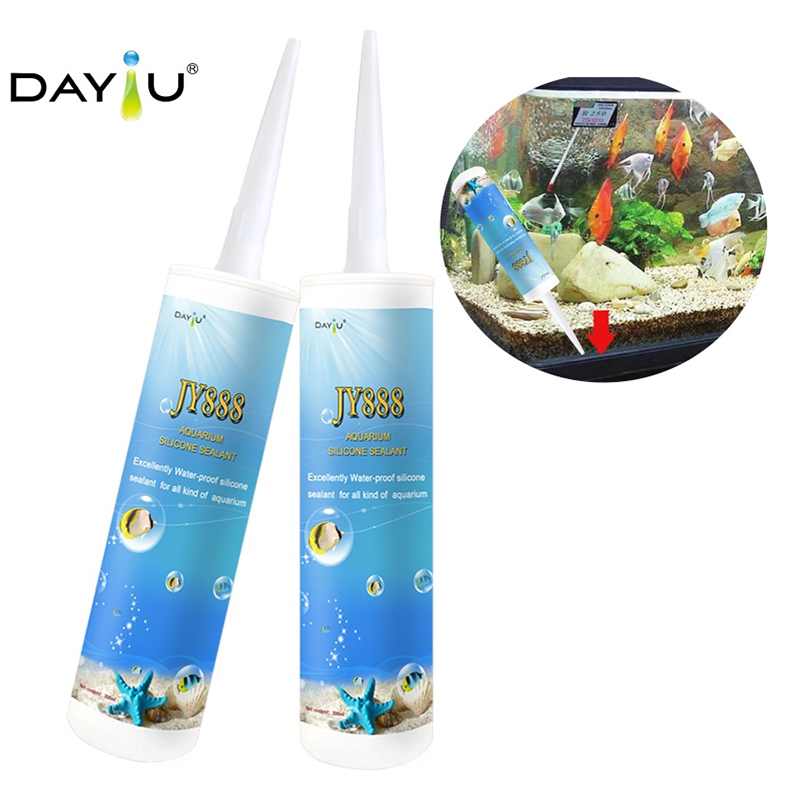
Analyzing the chemical properties of a true aquarium silicone sealant explains how these specific formulations handle massive water pressure. The core mechanism relies on an acetoxy cure system. During the curing process, the silicone reacts with atmospheric moisture and releases acetic acid, which produces a distinct vinegar-like odor. This specific chemical reaction is not just a byproduct; it is the mechanism that etches the microscopic surface of the glass.
The acetoxy reaction allows the silicone polymers to form a direct chemical bond with the silica molecules inherent in the glass. This creates a siloxane bond that is incredibly strong. When properly applied and fully cured, this chemical fusion results in a cohesive bond that is actually stronger than the silicone material itself. If forced to the breaking point, the silicone rubber will tear before the bond to the glass fails.
Modulus is a critical evaluation dimension. In sealant terminology, modulus refers to the amount of force required to stretch the cured material. Low-modulus silicones stretch easily and are ideal for expansion joints in buildings. High-modulus formulations are stiffer and resist stretching. High-modulus silicone is absolutely mandatory for large glass enclosures. If a low-modulus sealant is used, the continuous water pressure will cause the seams to stretch excessively, thinning the joint and eventually leading to structural failure. High-modulus silicone holds the glass panels firmly in place, allowing only the minimal deflection necessary to prevent glass breakage.
Primerless adhesion capabilities provide a significant operational advantage. Many industrial adhesives require the application of a separate chemical primer to the substrate before the adhesive is applied. High-grade aquatic silicones achieve maximum bond strength directly on clean glass without the need for primers. This reduces implementation complexity, saves time, and eliminates a potential point of failure caused by improper primer application. In field repairs, introducing a primer adds an unnecessary variable. If the primer flashes off too quickly or is applied unevenly, the entire seam is compromised. Primerless acetoxy formulations remove this risk entirely.
Selecting the exact product for a project requires evaluating several conceptual trade-offs based on the scale of the build and the specific environmental conditions. A framework for selection must prioritize structural safety above all aesthetic considerations.
Reading technical data sheets is a mandatory step for builders. The technical data sheet provides the verified laboratory testing results for the sealant. For small enclosures under 50 gallons, a tensile strength of 250 PSI may suffice. However, for custom builds exceeding 200 gallons, builders must source structural silicones with tensile strength ratings exceeding 350 PSI. Establishing these minimum safety margins ensures the joints can handle both the static water weight and dynamic forces.
Material compatibility dictates application limits. Specialized aquatic silicone is strictly designed for glass. Silicone cannot form a structural chemical bond with acrylic surfaces. While silicone might temporarily stick to acrylic, it will easily peel away under pressure. Acrylic enclosures require solvent welding, a completely different chemical process that melts and fuses the plastic panels together. Attempting to build or structurally repair an acrylic tank with silicone will result in guaranteed failure. We frequently see hobbyists try to install glass baffles in an acrylic sump using silicone. Within months, the baffles blow out because the silicone simply releases from the plastic.
High-grade aquatic silicones demonstrate excellent compatibility with both saltwater and freshwater environments. Once the acetoxy curing process is completely finished and all acetic acid has off-gassed, the resulting silicone rubber is completely chemically inert. It will not react with the corrosive salt mixtures used in marine reef setups, nor will it degrade under the varying pH levels found in specialized freshwater planted environments.
Builders must also evaluate the functional trade-offs between black and clear silicone. Clear silicone offers a seamless, floating-glass aesthetic highly prized in modern aquascaping. However, clear joints expose the inner bonding surface to light, allowing microscopic algae to grow between the glass and the silicone over time, which can cause unsightly discoloration. Black silicone provides high UV resistance and completely blocks light penetration into the seam, hiding algae ingress and maintaining a clean appearance over decades of use.
Addressing leaks requires understanding the chemical reality of silicone adhesion. A common user error involves the attempt to patch a leak by applying new silicone directly over old, cured silicone. New silicone will not adhere to cured silicone. The chemical cross-linking process that gives silicone its strength also renders its surface non-stick to new applications. Applying a fresh bead over an old seam creates a false seal that water pressure will quickly bypass.
Attempting to patch a localized leak is a temporary and highly risky fix under continuous water pressure. Water travels through microscopic channels in degraded silicone. A leak showing at the bottom corner may actually originate from a failing seam halfway up the glass panel. Advocating for complete seam replacement is the only structurally sound approach. To execute a cohesive repair, the technician must strip the entire inner seal of the affected panel, ensuring the new silicone bonds directly to bare glass rather than overlapping old material.
Differentiating between structural and non-structural seals is vital during repairs. The inner fillet seal—the bead of silicone visible on the inside corners of the tank—serves primarily to waterproof the joint and protect the structural seam from aquatic life. This inner seal can be carefully removed and replaced without dismantling the enclosure. However, the structural silicone located directly between the flat edges of the glass panes holds the tank together. If this microscopic structural seam is compromised, degraded, or filled with algae, replacing the inner fillet will not restore safety. A compromised structural seam requires a complete tank teardown, thorough cleaning, and a total rebuild.
Here is the standard field protocol for stripping a compromised joint:
Drain the enclosure completely and move all livestock to holding vats.
Use a utility knife to slice away the bulk of the inner fillet seal.
Apply a specialized silicone remover gel to soften the remaining thin layer of cured material.
Scrape the glass repeatedly with fresh, single-edge razor blades until no visible residue remains.
Wipe the entire joint area with high-purity acetone to dissolve any microscopic silicone oils left behind.
Even the highest-rated Aquarium Silicone Sealant will fail if implementation protocols are ignored. Strict operational procedures are required to ensure the sealant performs to its laboratory specifications. The majority of seam failures stem from improper surface preparation rather than defective materials.
Glass cleaning protocols must be exhaustive. The absolute necessity of removing all organic oils, fingerprints, dust, and old silicone residue cannot be overstated. Technicians must use fresh razor blades to scrape the glass down to the bare silica. Following mechanical removal, specific solvents such as high-purity acetone or 99% isopropyl alcohol must be used to wipe the bonding surfaces. Standard household glass cleaners must be strictly avoided, as they contain ammonia and leave behind a chemical film that prevents the silicone from bonding properly.
Joint thickness and spacing require precise engineering. Glass panels should never be pushed completely flush against one another, squeezing all the silicone out of the joint. Builders use small spacers to maintain a minimum silicone thickness, typically between 1.5mm and 2mm, depending on the scale of the build. This specific gap ensures the joint contains enough physical material to flex and absorb structural deflections without tearing. Capillary action helps draw the silicone deep into the gap during application, ensuring a void-free structural bond.
Curing environment constraints heavily influence the final strength of the joint. Acetoxy silicones rely on atmospheric humidity to initiate the cross-linking process. Environments that are too dry will drastically slow down curing times. Technicians must be warned against the skin-over fallacy. While the outer layer of the silicone may feel dry and rubbery to the touch within a few hours, the deep interior of the structural seam remains raw and uncured. Introducing water pressure too early will cause the uncured center to rupture. Full-depth curing for structural seams often requires 7 to 14 days of undisturbed resting time before the enclosure can safely hold water. We mandate a full 14-day cure for any build over 150 gallons. Rushing the water test is the most common reason for immediate seam failure on custom builds.
Calculate the exact glass thickness and joint surface area required for the water depth of your specific project before purchasing materials.
Procure the appropriate volume of commercial-grade, high-modulus aquatic silicone to complete all seams continuously without stopping.
Execute a rigorous surface preparation phase using mechanical scraping and high-purity acetone to strip the glass down to bare silica.
Insert 1.5mm to 2mm spacers between glass panels during assembly to guarantee adequate structural joint thickness.
Enforce a strict 7 to 14-day curing period in a humidity-controlled environment before introducing any water into the system.
A: When properly applied to clean glass, high-quality structural aquatic silicone can last 10 to 20 years under continuous water pressure. Lifespan depends on the quality of the initial surface preparation, the modulus of the sealant, and whether the seams are protected from intense UV light and physical damage from algae scrapers.
A: No. Many regular 100% silicones contain anti-mold additives and biocides that are highly toxic to aquatic life. Furthermore, consumer-grade silicones usually lack the high tensile strength and high-modulus characteristics required to withstand continuous hydrostatic pressure, leading to eventual seam failure.
A: For structural integrity, the silicone joint between the glass panels should typically be maintained at a thickness of 1.5mm to 2mm. This spacing provides enough material for the silicone to act as a flexible hinge, absorbing the natural deflection of the glass without tearing.
A: While the surface may skin over in a few hours, full-depth curing requires significantly more time. For structural aquarium seams, you must wait 7 to 14 days before adding water. Curing time depends on the thickness of the joint, ambient room temperature, and humidity levels.
A: No. Silicone does not form a structural chemical bond with acrylic or other plastics. While it may temporarily stick, water pressure will cause it to peel away. Acrylic enclosures require specific chemical solvent welding to fuse the panels together permanently.
A: No. New silicone will not adhere chemically to cured silicone. Applying a patch over an old seam creates a weak mechanical bond that water will easily bypass. You must completely strip the old silicone down to bare glass before applying a new seal.


