+86-20-86215789 service@adhesive-dy.com

Views: 0 Author: Site Editor Publish Time: 2026-07-31 Origin: Site
Joining dissimilar materials—specifically porous or semi-porous plastics to non-porous metals—presents a fundamental engineering challenge due to differing rates of thermal expansion, surface energy profiles, and chemical resistances. You can successfully bond metal to plastic using Contact Adhesive, provided you understand the physical limitations of the substrates involved. Selecting a reliable metal to plastic adhesive requires balancing shear strength, impact resistance, application speed, and production scalability. Specifying the wrong chemistry leads to delamination, assembly failure, and increased warranty claims.
While structural epoxies are traditionally favored for rigid bonds, contact adhesives offer unique advantages for large surface areas and flexible assemblies. They create an instant bond upon contact, eliminating the need for long clamping times. This guide evaluates the technical viability, limitations, and implementation realities of using contact adhesive for metal-to-plastic bonding. You will learn how to prepare surfaces, select the right formulation, and avoid common failure points in multi-material assemblies.
Viability is Material-Dependent: Contact adhesive effectively bonds metal to High Surface Energy (HSE) plastics (e.g., ABS, Polycarbonate) but requires specialized primers or alternative chemistries for Low Surface Energy (LSE) plastics (e.g., Polypropylene, Polyethylene).
Flexibility Over Structural Load: Contact adhesives excel in applications requiring flexibility and vibration dampening but are not suitable for high-load, structural, or high-tensile assemblies.
Chemistry Matters: Selecting between a neoprene contact adhesive and an SBS contact adhesive dictates the assembly's heat resistance, tack time, and long-term durability.
Preparation is Critical: Successful multi material bonding adhesive applications require strict adherence to mechanical abrasion (on both the metal and plastic surfaces) and solvent-cleaning protocols to prevent adhesive failure at the boundary layer.
Aesthetic and Thickness Limitations: Unlike gap-filling epoxies, contact adhesives form an ultra-thin, non-shrinking bond line but are susceptible to "telegraphing" (telegraphing surface imperfections through thin plastic laminates).
Defining a successful bond requires looking at peel strength, shear strength, and environmental resistance. Mating rigid metals with variable-stiffness plastics introduces dynamic stress. A successful joint must withstand these stresses without the adhesive layer fracturing or peeling away from either substrate. When you bolt or glue a sheet of ABS plastic to a steel frame, the assembly will experience shear forces the moment the ambient temperature changes.
Metals and plastics expand and contract at completely different rates. We measure this using the Coefficient of Thermal Expansion (CTE). When ambient temperatures fluctuate, a rigid adhesive will crack as the plastic expands faster than the metal. Contact adhesives feature an elastomeric nature. This flexibility accommodates the movement between dissimilar materials without fracturing the bond line. They absorb the shear stress generated by thermal cycling, acting as a microscopic shock absorber between the two rigid substrates.
Surface energy dictates how well an adhesive wets out on a substrate. We categorize common plastics into two distinct groups based on their dyne levels. High Surface Energy (HSE) plastics include PVC, Acrylic, ABS, and Polycarbonate. Low Surface Energy (LSE) plastics include PTFE, Polypropylene, and Polyethylene. Contact adhesives wet out and bond exceptionally well to HSE plastics. The liquid adhesive spreads evenly, allowing the solvents to bite into the polymer matrix. Conversely, adhesives bead up and fail on LSE plastics. You cannot bond LSE plastics without chemical modification, polyolefin primers, or surface pre-treatments like corona or flame treatment.
Contact adhesives operate as thin-film bonding agents. Unlike 100% solid epoxies, they contain solvents that evaporate during the flash-off period. This leaves behind a thin, non-shrinking elastomeric film. Because of this evaporation, contact adhesives cannot fill structural gaps or voids. The mating surfaces must be perfectly matched and flush. Any gaps will result in trapped air and zero mechanical adhesion at that specific point. If your metal frame has a 2mm dip, the plastic will either bridge that gap with no adhesion, or you will have to force the plastic down, creating permanent stress on the bond line.
Industrial formulations vary significantly based on the base polymer. Choosing the right industrial contact glue depends entirely on your specific environmental conditions and assembly requirements. You cannot grab a generic can off the shelf and expect it to hold up in a high-heat engine bay or a freezing outdoor environment.
A neoprene contact adhesive (Polychloroprene) stands out for its durability. It offers high heat resistance, often withstanding temperatures exceeding 200°F (93°C). It also provides excellent oil and chemical resistance alongside high ultimate strength. You should use neoprene formulations for automotive panels, industrial machinery, and any applications exposed to elevated temperatures or environmental shear. The cross-linking nature of neoprene provides a tough, resilient bond that resists creep under sustained loads.
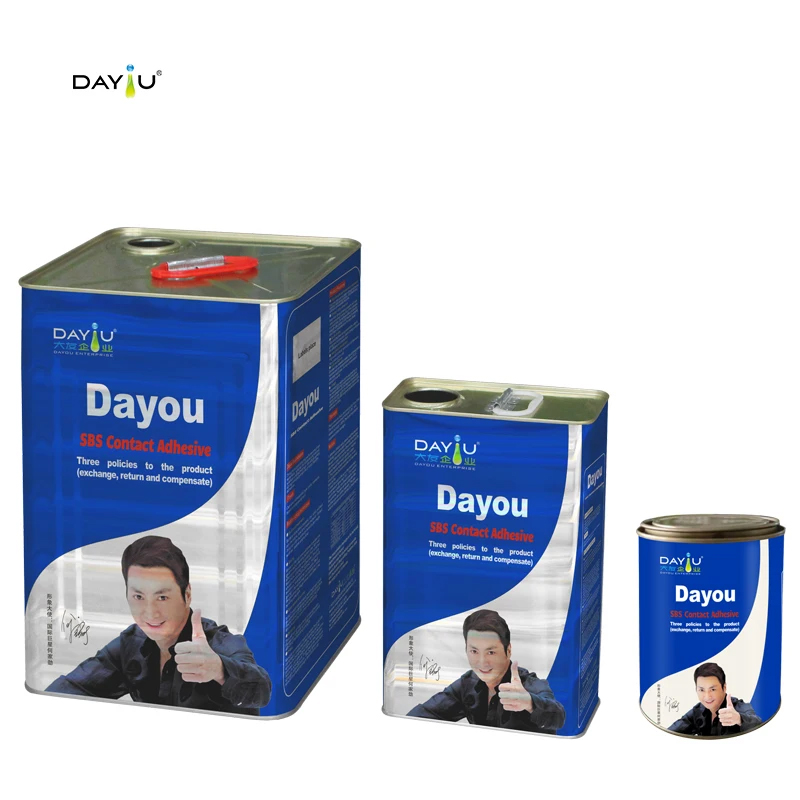
An SBS contact adhesive (Styrene-Butadiene-Styrene) prioritizes speed and flexibility. It develops tack rapidly and remains highly flexible after curing. However, it features lower heat resistance compared to neoprene. SBS formulations work best for foam-to-metal bonding, upholstery, and low-stress interior plastic-to-metal assemblies. If you are wrapping a metal console with a vinyl or soft plastic skin, SBS provides the aggressive initial grab needed to hold the material around complex curves without clamping.
You must also choose between solvent-based and water-based formulations. Solvent-based options provide a more aggressive chemical bite into certain thermoplastic surfaces. This enhances mechanical interlocking. They flash off quickly but require strict ventilation. Water-based adhesives offer better VOC compliance and are safer to handle, but they require longer flash-off times and do not penetrate plastic surfaces as aggressively. In a high-volume shop, the speed of solvent-based adhesives usually outweighs the handling benefits of water-based alternatives, provided proper exhaust systems are in place.
Rapid prototyping frequently involves mating custom plastic parts to standard metal hardware. Common DIY adhesives like hot glue or basic cyanoacrylates routinely fail in these scenarios. They suffer from brittle failure under vibration and exhibit exceptionally poor peel strength when joining metal inserts, pins, or brackets to plastic parts. When a machine vibrates, a brittle cyanoacrylate bond shatters. Contact adhesive absorbs that vibration.
Bonding 3D printed substrates (PLA, PETG, ABS) to metal requires managing the unique texture of the print. The layer lines of 3D prints heavily impact adhesive wet-out. If the adhesive is too thin, it will not bridge the microscopic valleys between layer lines. You need an adhesive with enough viscosity to sit on the ridges while still wetting the surface.
Contact adhesives can effectively seal and bond the textured surfaces of 3D prints to smooth metal plates. They distribute the load evenly across the entire surface area. The solvent content can slightly soften the surface of prints like ABS, creating a stronger weld. You must manage the solvent flash-off correctly to ensure you do not melt or warp thin-walled plastic substrates. If you trap solvent inside the infill of a 3D print, it will slowly eat the plastic from the inside out.
To establish proper application boundaries, we must compare contact adhesive against other standard bonding agents. No single adhesive solves every engineering challenge. You must match the chemistry to the physical demands of the joint.
Adhesive Type | Primary Strengths | Primary Weaknesses | Best For |
|---|---|---|---|
Contact Adhesive | Instant green strength, high flexibility, large surface area coverage. | Cannot fill gaps, low structural load capacity, telegraphs imperfections. | Laminates, veneers, flexible trim to metal. |
Structural Epoxies | Unmatched load-bearing, gap-filling, high tensile strength. | Brittle, requires clamping, long cure times, rigid under thermal stress. | Heavy structural loads, rigid assemblies. |
Cyanoacrylates | Rapid cure, excellent for small tight-fitting parts. | Highly brittle, poor moisture resistance, fails on large areas. | Small pins, temporary tacking. |
Polyurethanes | Excellent moisture resistance, structural flexibility. | Long cure times, requires physical clamping, relies on ambient moisture. | Marine applications, outdoor structural bonds. |
Epoxies provide unmatched load-bearing capabilities. They fill gaps and do not shrink. However, they are brittle and require extensive clamping times. Contact adhesives offer instant green strength with zero clamping, but they will fail under heavy structural loads. If you are hanging a heavy metal bracket off a plastic wall, use epoxy. If you are laminating a plastic sheet to a metal desk, use contact adhesive.
Cyanoacrylates (super glues) cure rapidly but remain highly brittle. They degrade in moist environments and are poorly suited for large surface areas. Contact adhesives are vastly superior for laminating large sheets of plastic to metal substrates. You cannot physically spread cyanoacrylate over a 4x4 foot panel before it cures; contact adhesive gives you the open time required for large-scale work.
Polyurethanes offer excellent moisture resistance and structural flexibility. The trade-off is that they require longer cure times, physical clamping, and ambient moisture to cross-link properly. They are excellent for construction, but slow down manufacturing lines that require immediate part handling.
Preventing delamination requires strict adherence to surface preparation protocols. You must prepare both the metal and the plastic substrates correctly to ensure a successful multi material bonding adhesive application. Skipping surface prep guarantees failure.
Follow this exact sequence for surface preparation and application:
Degrease both the metal and plastic surfaces using a safe solvent like isopropyl alcohol to remove surface oils and mold release agents.
Mechanically abrade the metal substrate using 80-120 grit sandpaper or media blasting to remove oxidation and create a rough profile.
Lightly scuff the plastic substrate with 220-320 grit sandpaper to remove the glossy finish without gouging the material.
Perform a final solvent wipe on both surfaces to remove the sanding dust.
Apply an even coat of adhesive to both the metal and the plastic surfaces.
Wait for the adhesive to flash off until it is dry to the touch and does not transfer to your knuckle.
Mate the surfaces precisely, as you will not be able to reposition them once contact is made.
Apply heavy, even pressure across the entire assembly using a J-roller to consolidate the bond and expel air.
Mechanical surface profiling is mandatory. For metal substrates, you must remove the microscopic layer of oxidation that forms on aluminum, steel, and stainless steel. If you glue to the oxidation, the glue holds the rust, and the rust flakes off the metal. For plastic substrates, lightly abrade the surface to remove mold-release agents left over from the manufacturing process. Do not create deep gouges or cause thermal degradation by sanding too aggressively, as this weakens the polymer structure.
Managing flash-off times dictates the success of the bond. Apply the adhesive to both surfaces and wait. Use the "dry-to-the-touch" rule. The adhesive should feel tacky but should not transfer to your knuckle when touched lightly. Mating the surfaces too early causes solvent entrapment. The trapped solvent turns into gas, creating bubbles that push the plastic away from the metal, leading to joint failure.
Transitioning from prototyping to full production requires evaluating workflow impacts. The primary trade-off involves production speed. You must balance the workflow impact of flash-off wait times against the massive benefit of zero-clamping time. Assemblies can move immediately to the next production step once mated. You do not need to store hundreds of clamped parts on racks overnight while waiting for the glue to cure.
Environmental resistance dictates long-term durability. You must assess how the assembly handles UV degradation, thermal cycling, and exposure to industrial solvents. Differential expansion handling is a major advantage here, as the elastomeric bond absorbs the stress of temperature changes. If the final product sits in direct sunlight, the metal will heat up significantly faster than the plastic. The adhesive must handle that shear stress daily.
Compliance and safety require facility audits. Handling solvent-heavy adhesives necessitates proper ventilation systems. Workers need appropriate PPE, including respirators and solvent-resistant gloves. Facilities must utilize explosion-proof storage cabinets and adhere to regional VOC emission limits. Water-based alternatives mitigate some of these risks but alter the production timeline due to slower drying rates. You must factor the cost of air handling and safety compliance into your production line setup.
Contact adhesive serves as a highly effective solution for large-surface, low-load, flexible assemblies. It reliably bonds laminates, trim, and acoustic panels to metal, provided the plastic is HSE or properly primed. The key to success lies in matching the specific adhesive chemistry to the environmental demands of the final product and executing flawless surface preparation.
Conduct peel tests on material off-cuts to verify adhesion before committing to full production runs.
Request Technical Data Sheets (TDS) from manufacturers to verify CTE compatibility and temperature limits.
Audit your facility's ventilation and VOC compliance capabilities to ensure safe handling of solvent-based products.
Implement a strict mechanical abrasion and solvent wiping protocol for all assembly line workers.
A: The best choice depends on the application. For large, flexible surface areas, contact adhesive works best. For rigid, high-load structural bonds, a two-part epoxy or specialized structural acrylic is superior. Always match the adhesive to the stress requirements and surface energy of the plastic.
A: Yes. Sanding metal with 80-120 grit sandpaper removes oxidation and creates a mechanical profile. This micro-texture allows the adhesive to grip the surface physically, significantly increasing the shear and peel strength of the final bond.
A: Premature peeling usually results from trapped solvents, poor surface preparation, or bonding to a Low Surface Energy (LSE) plastic without a primer. Ensure you follow the dry-to-the-touch rule before mating and always clean away mold-release agents from plastics.
A: No. As the solvents evaporate, the adhesive shrinks into an ultra-thin film. Mating surfaces must be perfectly flush. If you have gaps or uneven surfaces, you must use a 100% solid adhesive like epoxy or polyurethane.
A: You need substantial, even pressure across the entire surface. Hand pressure is rarely sufficient. Use a hard rubber J-roller or pass the assembly through a pinch roller to force the adhesive layers together and expel trapped air.
A: Heavy solvent formulations can soften or warp thin-walled 3D prints, particularly ABS or Polystyrene. Apply thin coats, allow proper flash-off time so the aggressive solvents evaporate before mating, and test on a scrap piece first.


