+86-20-86215789 service@adhesive-dy.com

Views: 0 Author: Site Editor Publish Time: 2026-10-19 Origin: Site
Sealing rough openings around window frames is a known headache on job sites. Irregular gaps between the framing and the window unit create massive vulnerabilities in the building envelope. If you leave these cavities unsealed or use the wrong material, you guarantee air leaks, moisture intrusion, and thermal bridging. Standard high-expansion foams cause severe problems here. They exert heavy lateral pressure while curing, which bows window frames, jams sashes, and voids manufacturer warranties. On the flip side, stuffing fiberglass insulation into the gap fails to stop airflow and leaves the cavity open to condensation. Polyurethane foam fixes these issues when you apply the correct low-expansion formulation. It bridges asymmetrical gaps, blocks drafts, and accommodates building movement without distorting the frame. We will break down how to select and apply the right polyurethane sealant to hit your airtightness targets without risking structural deflection.
Expansion Control is Critical: Low-pressure, low-expansion PU foam formulations are mandatory for window and door installations to prevent frame distortion during the curing process.
Thermal and Acoustic Yield: High-quality PU foam provides superior R-values and acoustic dampening compared to traditional fiberglass batting when filling irregular, hard-to-reach cavities.
Moisture and Air Barrier Integration: Closed-cell and specialized open-cell foams must be evaluated based on their vapor permeability and compatibility with existing flashing and weather barriers.
Application Constraints & Dispensing: Curing times, adhesion strength, and foam yield are heavily dictated by ambient temperature, humidity, substrate preparation, and the choice between professional gun-dispensed versus retail straw-dispensed systems.
Polyurethane foam relies on a rapid chemical reaction to do its job. When you pull the trigger on the dispensing gun, the isocyanate and polyol resin mixture hits the air and reacts instantly with ambient moisture. This moisture-curing process triggers an exothermic reaction. The material heats up, expands, and pushes into asymmetrical voids. The expanding polymer matrix flows deep into crevices, conforming perfectly to the rough opening. This creates a monolithic seal that completely blocks air infiltration.
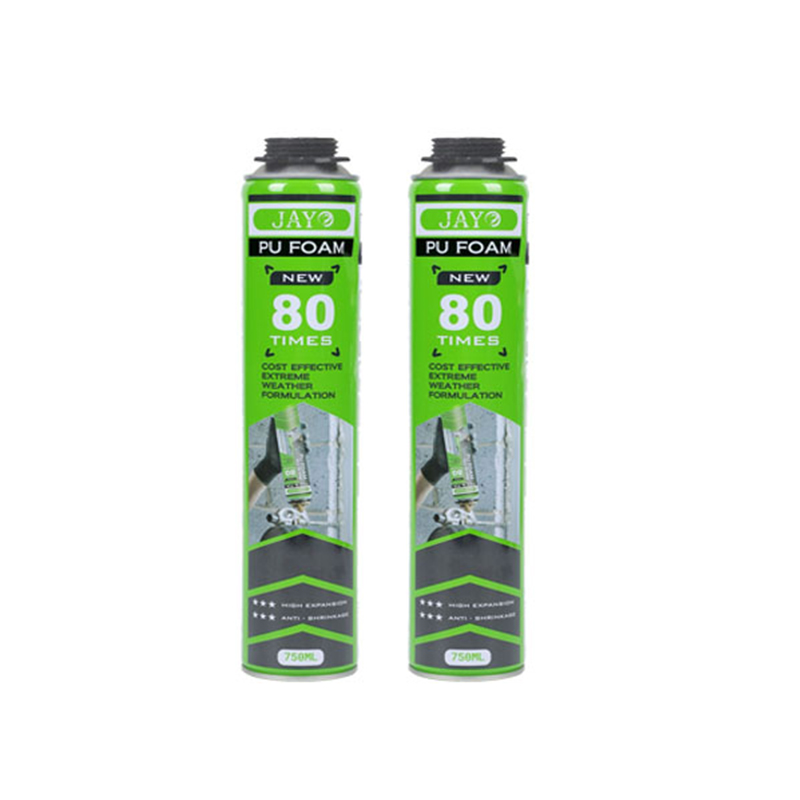
You need to understand the cellular structure of the cured product to use it correctly. Closed-cell foams cure into a rigid, dense structure. They resist bulk water penetration and provide high thermal resistance. Open-cell foams cure into a softer, flexible matrix that remains highly vapor-permeable. For sealing window perimeters, manufacturers design a specialized hybrid structure. This hybrid maintains enough closed cells to block water and air while keeping enough flexibility to absorb building movement. Selecting the right PU Foam For Wall applications ensures you insulate the cavity without trapping moisture against the wood framing.
The expansion phase of polyurethane curing generates serious outward force. Standard high-expansion foams are built for large open cavities. They exert heavy lateral pressure as they cross-link and harden. When you inject this aggressive foam into the tight space between a rough opening and a window frame, the pressure has nowhere to go but against the frame itself. Vinyl, aluminum, and even solid wood frames will bow under this force. This leads to inoperable windows, shattered glass, and angry clients.
Low-pressure, low-expansion foams are engineered specifically to stop this from happening. Chemists modify these formulations to limit the expansion rate and cap the resulting pressure. They expand just enough to seal the gap and then stop. They cure without pushing against the window jambs. Establishing this technical baseline is non-negotiable for fenestration projects. You must verify that the chosen foam is explicitly rated for window and door installations to prevent costly structural deflection.
A dangerous misconception on job sites is that expanding foam acts as a primary structural adhesive for the window unit. It absolutely does not. Polyurethane foam is strictly an insulating sealant. Mechanical fasteners, such as screws and nails, along with proper shimming, carry the entire dead load of the window and resist wind loads.
However, the foam plays a massive secondary role by encapsulating these structural components. As the foam expands, it flows around installation shims, mounting flanges, and fastener penetrations. This encapsulation locks the shims in place. They will not shift due to vibration or building settling. Furthermore, the foam insulates the metal fasteners. Without foam, these screws act as thermal bridges, conducting cold air directly from the exterior into the wall assembly. The foam creates a continuous thermal break without replacing the need for rigid mechanical anchoring.
The primary job of any cavity fill is to stop heat transfer. The effective R-value per inch of cured polyurethane foam typically ranges from R-4 to R-5. This depends on the specific density and cell structure of the product. Fiberglass batting loses its insulating value the second it gets compressed or exposed to air currents. Expanding foam maintains its stated R-value by completely eliminating convective loops within the rough opening.
Beyond thermal resistance, the foam serves as your primary air barrier. Meeting modern building codes requires passing rigorous blower door tests. A continuous bead of window frame gap filling foam stops air leakage dead in its tracks. It seals the micro-cracks between the framing lumber and the window jamb. This ensures conditioned indoor air stays inside and unconditioned exterior air stays outside. This dual action of insulating and air-sealing makes it vastly superior to traditional stuffing methods.
Buildings move. Wood shrinks and swells with the seasons. A window frame made of vinyl has a vastly different coefficient of thermal expansion than the surrounding wood or steel framing. If the sealant connecting these two materials cures into a brittle, rigid mass, the bond will fracture the second the framing shifts.
Cured window foam must remain elastomeric. It needs the physical memory to stretch and compress repeatedly without breaking its adhesive bond to the substrate or the frame. High-quality formulations absorb this dynamic movement. They maintain a continuous seal even as the building settles or as heavy wind loads cause the window unit to flex slightly within the rough opening.
Managing moisture dictates the survival of a wall assembly. Your sealant must handle bulk water from rain differently than it handles water vapor from humidity. The exterior flashing and weather-resistive barrier (WRB) act as the primary defense against bulk water. The foam acts as a secondary line of defense. Closed-cell structures repel liquid water effectively.
Vapor permeability requires a different approach. If moisture vapor penetrates the wall cavity, it needs a way to dry out. If the foam creates an impermeable vapor barrier on the cold side of the wall, condensation forms within the rough opening. Trapped moisture rapidly leads to mold growth and wood rot. Specialized window foams strike a balance. They block liquid water and air drafts but maintain a specific perm rating that allows trapped vapor to diffuse harmlessly out of the cavity.
Irregular gaps around window frames act as massive flanking paths for exterior noise. You can install a window unit with triple-pane acoustic glass, but sound waves will easily bypass the glass and travel right through an unsealed rough opening. Expanding polyurethane foam provides excellent acoustic dampening by filling these voids with a dense, sound-absorbing cellular matrix.
We measure the effectiveness of this noise reduction using Sound Transmission Class (STC) and Outdoor-Indoor Transmission Class (OITC) ratings. By sealing the perimeter completely, the foam stops airborne sound transmission. The varying density of the foam cells breaks up sound waves across different frequencies. This significantly reduces the intrusion of traffic noise, construction sounds, and neighborhood disturbances into the living space.
Treating all expanding foams as interchangeable guarantees installation failure. The chemical makeup of a standard multipurpose construction foam is optimized for maximum expansion, high yield, and rapid gap filling in open areas. You use these where pressure is not a concern. These foams cure quickly, form a rigid structure, and almost always require trimming.
Window-specific formulations use different ratios of blowing agents and polymer resins. This achieves a controlled, low-pressure expansion. The resulting cell structure is finer and more uniform. Manufacturers also adjust the tooling time and tack-free time. This allows the foam to flow deeper into the cavity before it begins to skin over and harden. AAMA-verified window foams undergo specific testing to ensure they will not distort frames. Standard multipurpose foams offer no such guarantee.
The delivery method dictates the quality of the seal and the speed of the application. The industry relies on two primary dispensing systems. Each has distinct advantages and limitations in the field.
Feature | Professional Gun Applicator | Retail Straw Applicator |
|---|---|---|
Precision & Control | High. Adjustable set screw allows for exact bead sizing. | Low. On/off function only; difficult to modulate bead size. |
Waste Factor | Minimal. Gun can remain attached to the canister for weeks. | High. Usually single-use; uncured foam hardens in the straw. |
Cavity Penetration | Excellent. Long metal barrel reaches deep into rough openings. | Poor. Short plastic straw limits reach in deep cavities. |
Ergonomics | Excellent. Pistol grip reduces hand fatigue on large jobs. | Poor. Finger trigger causes cramping over extended use. |
Professional installations require gun-dispensed systems. The ability to control the flow rate prevents overfilling. Overfilling wastes material and creates messy cleanups. The precision barrel allows you to inject the foam at the very back of the cavity. This ensures a complete seal from the exterior to the interior.
When buying materials for a large residential project, contractors often look at the unit cost per can. Multipurpose foams cost less upfront. However, calculating the true return on investment requires looking at the total installed cost and the risk of failure.
The premium paid for specialized low-pressure foam and professional dispensing guns disappears the second you have to replace a single warped window unit. If a high-expansion foam bows a frame, you have to remove the trim, cut out the cured foam, attempt to realign the window, or replace the entire unit. Failing a blower door test due to inadequate air sealing results in costly delays and rework. Investing in the correct window-specific formulation eliminates these risks entirely.
Polyurethane foam requires a clean substrate to achieve maximum adhesive strength. Dust, sawdust, grease, and loose debris act as bond-breakers. If the foam adheres to a layer of drywall dust rather than the framing lumber, the seal will detach as the building moves. This creates an immediate air leak.
Different materials require different prep. Wood framing usually just needs a quick brush to remove sawdust. Masonry block and concrete absorb water rapidly and often hold heavy dust. You must brush masonry aggressively. Vinyl window frames often come from the factory with residual manufacturing oils. Wiping the vinyl frame with a clean, dry rag ensures the foam bites into the plastic properly.
Because these foams are moisture-curing, ambient humidity and substrate moisture content control the curing process. In dry conditions, experienced installers use a substrate misting technique. Lightly spraying the rough opening with water before applying the foam accelerates the chemical reaction. It improves the cellular structure and enhances adhesion.
Misting also prevents dry wood or porous masonry from wicking moisture away from the curing foam. If the substrate pulls the moisture out of the foam before it cross-links, the foam cures into a brittle, powdery mess that offers zero structural flexibility or air sealing.
Environmental conditions dictate the success of the application. Standard polyurethane foams have specific operational temperature ranges, typically between 40°F and 90°F. Applying standard foam in sub-freezing temperatures causes the material to become sluggish. It will not expand properly and may fail to cure entirely.
Cold-weather construction requires winter-grade foams. These formulations contain modified blowing agents that function in temperatures as low as 14°F. Humidity is equally critical. Low humidity environments stall the curing process. You must match the foam chemistry to your current site conditions to avoid catastrophic sealant failure.
One of the most common failures is foam shrinkage. You apply the foam, it looks great, and two days later it has pulled away from the window frame, leaving a massive gap. This usually happens for two reasons. First, applying the foam when the canister is too cold alters the chemical mix ratio as it exits the gun. Second, applying foam to a bone-dry substrate in low humidity causes the cells to collapse before they fully cure.
To prevent shrinkage, keep canisters in a conditioned space until right before use. Always mist the substrate in dry climates. If shrinkage occurs, you cannot just spray more foam on top of the gap. You must cut out the failed section and reapply.
Delayed expansion destroys window frames. This happens when the exterior of the foam bead skins over, but the interior remains uncured due to a lack of moisture. The foam sits dormant in the wall cavity.
Days or weeks later, ambient humidity finally penetrates the core. The dormant chemicals react, and the foam expands unexpectedly. Because the outer skin has already hardened, the new expansion forces push directly against the window jamb. Misting the cavity and applying the foam in smaller, layered beads prevents the core from remaining wet.
Cured polyurethane cannot handle ultraviolet light. If you leave it exposed to direct sunlight for more than a few weeks, the foam discolors. It turns from pale yellow to dark orange, and eventually degrades into a brittle powder. You must cover it with window trim, casing, or a UV-resistant sealant shortly after installation.
Trimming excess foam presents another massive risk. When the foam cures, it forms a smooth, dense outer skin that provides the bulk of its moisture resistance. Slicing off excess foam with a knife removes this protective skin. This exposes the open cellular structure beneath. The exposed core absorbs water like a sponge. The optimal strategy is to size the bead correctly during application. Fill the cavity about 30 to 50 percent and allow it to expand flush with the frame. This avoids the need for trimming altogether.
The American Architectural Manufacturers Association (AAMA) provides the benchmark for fenestration installations. The AAMA 812 standard specifically addresses the assessment of single-component polyurethane foams used for installing windows and doors. This standard tests the dimensional stability of the foam and measures the exact pressure it exerts during expansion.
Using an AAMA 812-verified foam guarantees that the product has been independently tested and proven not to cause deflection in standard window frames. Building inspectors and window manufacturers look for this certification. Using a non-verified foam instantly voids the window manufacturer's warranty. This leaves you liable for any subsequent failures.
Standard polyurethane foam is combustible. While it is safe for use in isolated rough openings around windows, you cannot use it in applications requiring specific fire ratings unless it is specially formulated. Fire-rated foams contain flame retardants that allow them to resist ignition and slow the spread of fire and smoke.
Building codes dictate strict fireblocking requirements for annular spaces and wall penetrations that connect different floors or fire-rated assemblies. You must verify whether the local code requires a standard insulating foam or a designated fireblocking foam for the specific cavity you are sealing. Substituting a standard foam where a fireblock is required guarantees a failed inspection.
Indoor Air Quality is a major focus in modern construction. Polyurethane foams emit Volatile Organic Compounds (VOCs) during the curing process. High-quality foams achieve GREENGUARD Gold certification. This ensures their VOC emissions drop to safe levels rapidly after application. This makes them safe for use in occupied residential spaces, schools, and hospitals.
Environmental regulations regarding Global Warming Potential have forced a shift in foam chemistry. The industry is transitioning away from Hydrofluorocarbon blowing agents toward eco-friendly Hydrofluoroolefin blowing agents. These updated formulations comply with stringent new environmental codes while maintaining the necessary expansion and insulation properties.
Polyurethane foam remains the optimal material for bridging irregular gaps in rough openings. However, treating all formulations as interchangeable is a critical failure point. The physics of building movement, the chemistry of moisture curing, and the mechanics of thermal bridging demand a precise approach to sealant selection and application. Reserve standard multipurpose construction foams for general wall penetrations where structural deflection is not a concern. For the immediate perimeter of any window or door, exclusively use AAMA-certified, low-pressure gap filling foam applied via a professional dispensing gun.
Verify the operational temperature range on the canister matches your current site conditions before starting the job.
Clean all rough opening surfaces with a stiff brush to remove sawdust, dirt, and debris to ensure maximum adhesion.
Mist the framing lumber lightly with water using a spray bottle to accelerate the moisture-curing process and prevent cell collapse.
Fill the cavity to a maximum of 50 percent capacity to allow for natural expansion without overfilling the gap.
Cover the cured foam with exterior trim, casing, or a UV-blocking sealant within 14 days to prevent sunlight degradation.
A: No. Regular high-expansion foams exert excessive lateral pressure as they cure. This pressure easily bows vinyl, wood, or aluminum window frames, leading to jammed sashes and voided warranties. Always use a low-pressure, low-expansion formulation specifically rated for windows and doors.
A: The foam typically becomes tack-free within 10 to 15 minutes, allowing for minor adjustments. Full curing takes between 12 and 24 hours. This timeline depends heavily on ambient humidity and temperature. Low humidity or cold conditions significantly extend the cure time.
A: Closed-cell foams are highly water-resistant and repel bulk water, but they are not entirely waterproof under hydrostatic pressure. They act as a secondary air and thermal barrier. They must never replace proper exterior flashing, weather barriers, and sill panning.
A: Frame bowing usually occurs for three reasons: using a high-pressure formulation, over-filling the cavity, or experiencing delayed expansion. Delayed expansion happens in dry environments where the foam's interior remains uncured until moisture finally penetrates, causing it to expand days later.
A: Avoid trimming whenever possible. Cured foam develops a dense outer skin that resists moisture. Trimming removes this skin, exposing the open cells beneath to potential water absorption. Size your bead correctly to under-fill the cavity slightly, allowing it to expand flush without protruding.
A: Immediately apply acetone or a specialized PU foam cleaner to dissolve the uncured foam. Do not use water, as it accelerates the curing process. Once the foam cures on the glass, solvents will not work. You must carefully scrape it off with a razor blade.
A: Polyurethane foams experience minor thermal drift as trapped blowing agents slowly off-gas and are replaced by ambient air. However, high-quality closed-cell foams stabilize quickly after the initial curing phase. They maintain a consistent and highly effective R-value for the lifespan of the building assembly.