+86-20-86215789 service@adhesive-dy.com

Views: 0 Author: Site Editor Publish Time: 2026-07-28 Origin: Site
Contractors and builders frequently ask if PU Foam can effectively fill large structural gaps. The short answer is yes, but success depends entirely on the gap size, the foam formulation, and the application technique. Standard single-component polyurethane foams handle gaps up to three inches wide. Pushing beyond this limit without the right chemical system or structural support leads to uncured centers, material collapse, and compromised air seals. Understanding the mechanical limits of polyurethane prevents building envelope failures. Applying the wrong expansion rate in a deep cavity can warp framing or fail building fire codes. You must match the chemical curing process to the physical environment of the void. This guide breaks down the technical parameters of gap filling. You will learn how to select the correct formulation, manage curing risks in deep cavities, and apply layering techniques for oversized structural voids.
Size Limitations: Standard 1-component expanding PU foam can effectively fill gaps up to 3 inches wide; gaps larger than this require specific high-expansion formulations, dual-component systems, structural layering techniques, or alternative backup materials.
Formulation Matters: Selecting between high-expansion, low-expansion, open-cell, closed-cell, and 1K versus 2K chemical systems dictates the success of the seal, thermal resistance, and structural safety.
Curing Realities: Deep, large cavities present unique curing challenges due to moisture dependency; improper application of 1-component foams leads to uncured liquid centers and eventual material collapse.
Deformation & Pressure Risks: High-expansion foams exert significant pressure during curing, requiring low-pressure formulations (window door foam) or mechanical bracing when applied near delicate substrates.
Fire & Code Compliance: Large volume voids require strict adherence to local building codes regarding fireblocking (e.g., ASTM E814/UL 1479) and fire retardancy ratings (Class A or B1/B2 classifications).
In construction, gap dimensions dictate the required sealing methodology. A standard gap typically ranges from a hairline crack up to one inch. We define a "large gap" as any void measuring between one and three inches wide. Voids exceeding three inches cross into extreme territory. These oversized cavities demand specialized approaches. Standard single-component foams struggle to cure properly when pushed beyond a three-inch depth in a single pass. Recognizing these dimensional thresholds prevents material failure and ensures long-term performance. When you encounter a void larger than three inches, you must immediately shift your approach from simple filling to structural layering or hybrid material integration.
Filling a large void requires more than just occupying space. A successful application must achieve a continuous, unbroken air seal to prevent draft penetration. The cured material must maintain its stated thermal resistance, or R-value, over the lifespan of the building. It also needs to prevent vapor transmission to stop condensation buildup within wall cavities. Furthermore, the cured foam must possess enough flexibility to accommodate natural structural deflection and seasonal building movement without cracking or losing adhesion. If the foam shrinks away from the substrate after curing, the entire application has failed its primary objective.
A fundamental engineering limitation exists when using polyurethane materials. Even the densest expanding PU foam is strictly non-structural. It cannot support dead loads from building materials or live loads from occupancy. Regardless of the gap size or the foam density, it serves purely as an insulation and sealing medium. Attempting to use foam to support masonry, framing, or heavy fixtures will result in structural failure. Always use mechanical fasteners or structural shims to carry loads before applying foam. Foam fills the void; it does not hold the building together.
Large wall cavities present significant fire risks by acting as chimneys during a blaze. Local building codes strictly regulate how these voids are sealed. Fireblocking is legally mandated in specific areas of residential and commercial structures, such as top plates, sill plates, and pipe penetrations. In these zones, you must specify a fire-rated insulation filling foam that meets ASTM E814 or UL 1479 standards. Failing to use compliant materials in large cavities results in failed inspections and severe safety liabilities. Always verify the fire rating classification (Class A, B1, or B2) before applying foam in commercial wall assemblies.
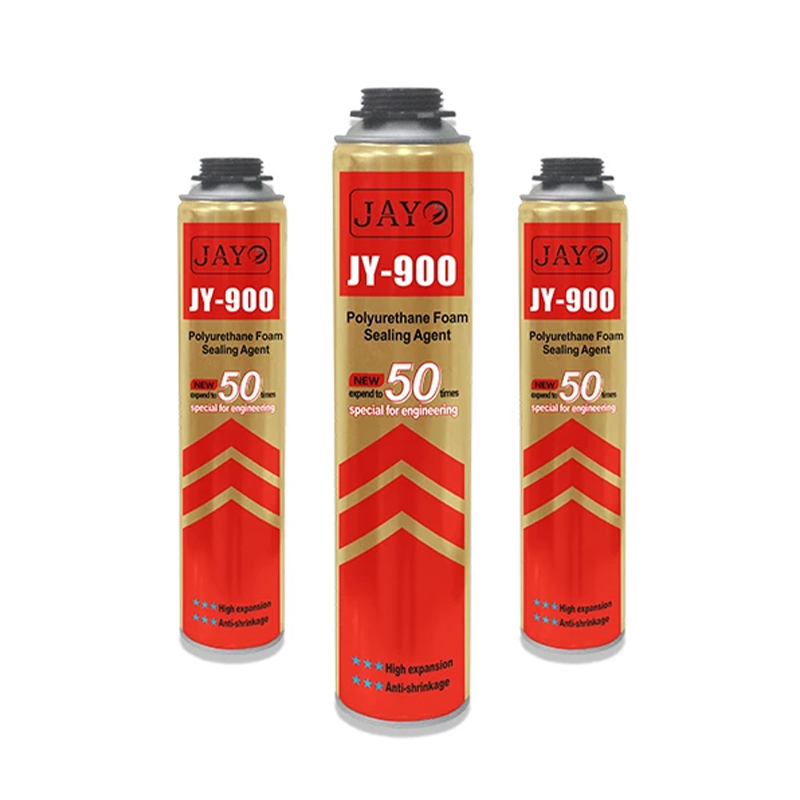
High-expansion foams utilize aggressive chemical blowing agents. These formulations can expand up to 300% of their original liquid volume. This rapid expansion makes them highly effective for deep, unconstrained cavities like foundation penetrations. However, this aggressive expansion generates substantial outward pressure during the curing phase. You must never use high-expansion foam around delicate substrates or unsupported framing.
Conversely, low-expansion foams offer controlled, predictable growth. They typically expand only 20% to 30%. This minimal expansion prevents substrate deflection. Specifying a low-pressure window door foam prevents the bowing of jambs and the distortion of structural framing. Using high-expansion foam around a window will almost certainly pinch the sash and ruin the installation.
Single-component (1K) foams react with ambient humidity and substrate moisture to cure. The moisture triggers the polymerization process. In deep, sealed voids, ambient moisture cannot penetrate past the outer skin of the foam. This limitation restricts 1K foams to shallower applications or requires multi-layering. If you spray a massive blob of 1K foam into a deep hole, the outside will harden while the inside remains a sticky liquid.
Two-component (2K) systems bypass moisture dependency entirely. They mix a resin and a catalyst at the nozzle, initiating a rapid, exothermic chemical reaction. This makes 2K systems the industry standard for extremely deep, wide, or completely enclosed cavities. They cure uniformly throughout the entire mass within minutes, eliminating the risk of uncured centers. 2K systems cost more upfront but save hours of labor on large commercial sites.
Closed-cell polyurethane features densely packed cells that trap insulating gases. This structure provides exceptional rigidity, high R-values, and acts as a robust water and vapor barrier. It is the mandatory choice for exterior applications and large wall cavities where moisture exclusion is paramount. Closed-cell foam adds racking strength to wall assemblies, though it remains non-structural.
Open-cell foam is lighter, softer, and highly flexible. Its interconnected cells allow vapor to pass through. While excellent for interior acoustic dampening and accommodating building shift, it acts like a sponge if exposed to water. Never use open-cell foam in exterior large gaps where rain or ground moisture is present. It will absorb water, leading to rot and mold within the wall cavity.
The effectiveness of a seal relies heavily on surface bonding. High-quality PU foam for cracks adheres tenaciously to most common building materials. This includes masonry, concrete, treated lumber, metal, PVC, and gypsum. The chemical bond formed during curing is often stronger than the substrate itself. You will often tear the wood fibers before the foam releases its grip.
However, optimal bonding requires strict surface preparation. Dust, loose debris, and grease act as bond breakers. You must mechanically clean the void before application. For 1K foams, lightly misting the substrate with water is essential. This pre-moistening accelerates the cure rate and improves the cellular adhesion to the cavity walls. Skipping this step in dry climates guarantees poor adhesion and eventual seal failure.
Curing depth is the primary constraint of 1K systems. As the foam extrudes, the exterior surface contacts ambient air and moisture, skinning over rapidly. This cured outer skin creates a vapor barrier. In gaps deeper than three inches, this barrier prevents moisture from reaching the inner core of the foam mass. The chemical reaction simply stops halfway through.
When moisture cannot reach the core, you create an "uncured center." The interior remains a liquid monomer. Over time, this liquid can off-gas, shrink, or cause complete cell collapse. The structural integrity of the seal fails, leading to hollow voids that allow air and water infiltration. This is why deep cavities require specific application techniques rather than just pulling the trigger and hoping for the best.
When applied correctly, large-volume polyurethane applications deliver excellent long-term thermal insulation. Closed-cell formulations resist thermal drifting, maintaining their R-value over decades. The dense cellular network effectively halts convective heat transfer within large wall cavities. This performance relies entirely on achieving a uniform cell structure without large air pockets.
Beyond thermal control, dense polyurethane networks excel at draft exclusion. They block driving rain and seal foundation-to-sill-plate gaps effectively. Furthermore, the rigid cured material deters rodents and insects, eliminating common entry points in the building envelope. A properly filled large gap acts as a monolithic barrier against exterior elements.
High-yield expanding foams exert immense expansive pressure during the curing phase. This pressure can easily overcome mechanical fasteners. Applying aggressive foam in confined spaces will bow window jambs, distort door frames, crack drywall, and even push exterior siding off its nails. The force generated by expanding polyurethane is deceptive and highly destructive if mismanaged.
Mitigating this risk requires careful material selection and site preparation. Always specify low-pressure formulations for framed openings. For larger voids where high-expansion foam is necessary, install temporary mechanical bracing across the opening. Apply the foam in controlled stages, allowing the pressure to dissipate before adding more material. Never fill a constrained void to 100% capacity; fill it to 50% and let the expansion do the rest.
Filling gaps larger than three inches with 1K foam requires the "lift" method. Never attempt to fill a massive void in a single pass. Instead, apply the foam in successive, controlled layers of one to two inches. Allow each lift to fully cure and cool before applying the next. This prevents excessive heat build-up and ensures complete moisture penetration.
Clean the void thoroughly with a wire brush and vacuum.
Mist the substrate lightly with a water spray bottle.
Apply the first one-inch lift of foam along the deepest part of the gap.
Wait 15 to 30 minutes for the foam to skin over and become tack-free.
Mist the cured surface of the first lift with water.
Apply the second lift, repeating the process until the void is filled.
Polyurethane is highly susceptible to photo-oxidation. When exposed to solar radiation, the cured foam degrades rapidly. It discolors, turns brittle, and eventually crumbles into dust. This UV degradation compromises the air seal and water barrier within weeks of exposure. You cannot leave cured foam exposed on the exterior of a building.
You must protect all exterior foam applications from sunlight. Once the foam cures and is trimmed flush, mandate the immediate application of a protective barrier. Use exterior-grade elastomeric coatings, acrylic sealants, exterior paint, or physical cladding to shield the foam from UV rays. A simple layer of high-quality exterior caulk over the trimmed foam ensures decades of performance.
Rigid polyurethane foam is not suitable for dynamic joints that experience high shear stress, such as concrete expansion joints. The rigid cellular structure will crack under movement. For these applications, use closed-cell backer rods combined with high-grade elastomeric sealants. This system accommodates significant joint movement while maintaining a watertight seal. Foam is for static gaps; sealants are for moving joints.
When dealing with large masonry cracks that require structural integrity, foam is inadequate. Polyurethane cannot resist lateral loads or stop active hydrostatic pressure. For structural repairs in foundations or retaining walls, hydraulic cement or structural epoxy injection are the mandatory alternatives. These materials restore load-bearing capacity and provide robust water-stopping capabilities. Never use foam to fix a failing foundation wall.
For massive, non-structural voids, a hybrid approach is the most cost-effective and reliable method. Cut pieces of rigid XPS or EPS insulation board to fill 80-90% of the cavity volume. Insert the boards, then use expanding foam solely to seal the perimeter joints and lock the boards in place. This minimizes expensive foam usage, guarantees proper curing, and provides exceptional thermal resistance.
Gap Size | Recommended Material | Application Technique |
|---|---|---|
Under 1 inch | Standard 1K PU Foam | Single pass, direct injection |
1 to 3 inches | High-Expansion 1K Foam | Single pass or two lifts, misting required |
Over 3 inches | 2K System or Hybrid Method | Multi-layer lifts or rigid board insertion |
Dynamic Joints | Backer Rod + Sealant | Mechanical insertion, sealant overlay |
Estimating material requirements prevents mid-project shortages. Never rely solely on the liquid volume printed on the canister. Calculate the actual cured volume based on the manufacturer's yield specifications. Measure the cubic volume of the target gap (length x width x depth). Compare this against the stated board-foot yield of the foam to determine the exact number of cylinders or cans required. Always order 15% more material than calculated to account for waste and over-expansion trimming.
The delivery system impacts both efficiency and material quality. Standard consumer straw-dispensed cans are suitable for minor touch-ups but highly inefficient for large-scale projects. Professional gun-grade dispensers offer superior control, adjustable flow rates, and immediate shut-off. Gun-grade systems produce a denser, more consistent cell structure and drastically reduce material waste on commercial sites. The initial investment in a professional foam gun pays for itself after just a few cases of material.
Dispensing large volumes of polyurethane requires strict safety protocols. The chemical reaction releases MDI (methylene diphenyl diisocyanate) emissions. Ensure adequate ventilation during the application and curing phases. Applicators must wear appropriate personal protective equipment (PPE), including safety goggles, nitrile gloves, and, in enclosed spaces, an approved organic vapor respirator. Cured foam is inert, but the liquid components and off-gassing during the cure phase pose respiratory hazards.
Measure the exact dimensions of the void to determine if a 1K, 2K, or hybrid approach is required.
Mechanically clean the substrate and mist it with water before applying any 1-component foam.
Apply foam in controlled one-to-two-inch lifts for any gap exceeding three inches in depth.
Install temporary mechanical bracing when using high-expansion foam near delicate framing.
Seal all exterior cured foam with an elastomeric coating or paint immediately after trimming flush.
A: Standard single-component polyurethane foam can safely fill gaps up to 3 inches wide in a single pass. Attempting to fill larger voids at once often results in uncured liquid centers due to a lack of moisture penetration.
A: Yes, high-expansion foams exert significant pressure and will easily bow frames. Always specify a low-pressure, minimal-expansion formulation specifically designed for windows and doors to prevent structural distortion.
A: 1K foams rely on ambient moisture to cure, limiting their effectiveness in deep voids. 2K foams mix a resin and catalyst at the nozzle, curing chemically without moisture. 2K systems are superior for massive or enclosed cavities.
A: Surface skinning occurs within 10 to 15 minutes. However, deep cavities may require 12 to 24 hours for a full internal cure, depending on ambient humidity, temperature, and the depth of the application.
A: No. Polyurethane foam is strictly non-structural and cannot support loads or resist hydrostatic pressure. Use hydraulic cement or structural epoxy injections for load-bearing masonry repairs.
A: This happens when the foam is applied too thickly in a single pass. The outer layer skins over, preventing ambient moisture from reaching the core, leaving the center uncured, which later collapses and shrinks.
A: Yes, if it is exposed to sunlight. Cured polyurethane breaks down rapidly under UV radiation. You must cover exterior foam with paint, elastomeric sealant, or trim to prevent embrittlement and failure.


