+86-20-86215789 service@adhesive-dy.com

Views: 0 Author: Site Editor Publish Time: 2026-02-25 Origin: Site
When customers ask us whether MS Polymer Sealants are solvent-free, they’re usually trying to solve a real jobsite problem—not just confirm a label claim. They want a sealant that’s easier to use indoors, safer for installers, less likely to trigger complaints about odor, and more aligned with today’s expectations around VOC control. In many industries—construction, façade sealing, container and HVAC assembly, marine fittings, automotive body bonding, and general industrial sealing—“solvent-free” has become more than a marketing phrase. It’s tied to worker comfort, regulatory requirements, and long-term performance expectations.
From our perspective as a manufacturer-oriented supplier, the most practical answer is this: many MS Polymer Sealants are formulated to be solvent-free, but you should always verify by checking the product’s technical data sheet (TDS) and safety data sheet (SDS). “MS polymer” describes a polymer backbone (modified silane / silyl-terminated polymer technology), not a single universal recipe. One supplier’s MS Polymer Sealant may be 100% solids and solvent-free, while another may include small amounts of processing aids, plasticizers, or other additives that change VOC content and odor profile. The good news is that MS Polymer Sealants are widely known for enabling low-odor, low-VOC, and often solvent-free formulations—one reason they’ve become a preferred choice for modern sealing and bonding applications.
In this article, we’ll explain what “solvent-free” really means in sealant chemistry, why MS Polymer Sealants are commonly solvent-free, what exceptions to watch for, and how to select the right grade for your application. We’ll also cover performance characteristics—adhesion, elasticity, paintability, weather resistance—so you can connect the solvent question to real-world results.
In daily conversation, “solvent-free” often means: “It doesn’t smell strongly and it’s safer indoors.” That’s part of the picture, but technically, it usually refers to:
No intentionally added organic solvents used to thin the product
Very low VOC content, often near-zero depending on the formulation
High solids content, sometimes described as “100% solids”
However, it’s important to separate a few concepts that get mixed together:
Solvent-free: no solvent added as a diluent or carrier
Low odor: subjective; influenced by additives and curing chemistry
Low VOC: measurable; depends on product composition and test method
Non-hazardous: depends on classification and region-specific regulations
A sealant can be “solvent-free” yet still require normal industrial handling precautions. And it can be low odor while not being completely solvent-free. That’s why the product documentation matters.
MS Polymer Sealants are based on silyl-terminated polymer technology (often called modified silane or SMP). They typically cure by reacting with moisture in the air, forming a durable, elastic rubber-like material. The chemistry allows manufacturers to build products that balance:
Strong adhesion to many substrates
Flexible movement capability
Weather and UV resistance (depending on grade)
Paintability (in many cases)
Low odor and low VOC potential
In practice, MS Polymer Sealants are commonly used as hybrid sealants/adhesives—often bridging the gap between polyurethane (PU) sealants and silicones, while offering a friendlier indoor experience than traditional solvent-based systems.
Most modern MS Polymer Sealants are designed to be solvent-free or nearly solvent-free. That’s one of the reasons this technology is widely adopted for green-building and indoor applications.
Some MS Polymer Sealants may contain trace levels of volatile components or specific additives (not necessarily “solvents” in the traditional sense) depending on:
Desired viscosity and tooling properties
Open time requirements
Adhesion promotion strategy
Specialized performance targets (e.g., fast cure, high tack, low temperature workability)
So if “solvent-free” is a strict requirement for your project, the right approach is to confirm:
VOC content (if stated)
SDS composition and hazard classification
Any compliance claims relevant to your market
MS polymer technology can deliver workable viscosity without relying on solvent dilution. This makes solvent-free design easier while still achieving good extrusion and smooth tooling.
Many MS Polymer Sealants cure via moisture reaction at the polymer end groups. This curing pathway doesn’t require solvents to evaporate, which supports low VOC profiles.
Industrial customers increasingly prefer products that can be used in occupied spaces, enclosed workshops, or high-traffic facilities with fewer odor complaints and less ventilation burden.
Solvent-based sealants can shrink as solvents evaporate. Solvent-free systems generally reduce that risk, supporting more stable bead geometry and appearance.
Below is a practical comparison to help you understand where MS Polymer Sealants typically sit in the market.
Sealant Type | Solvent-Free Typically? | Odor Level | Paintability | Outdoor Durability | Notes |
MS Polymer Sealants | Often yes | Low to moderate | Often paintable | Good (grade-dependent) | Balanced sealing + bonding |
Silicone Sealants | Often yes | Low | Often limited (some types paintable) | Excellent | Great UV/weather resistance |
PU Sealants | Usually solvent-free (some exceptions) | Moderate | Usually paintable | Good | Strong, flexible; can yellow |
Acrylic Sealants | Often water-based | Low | Paintable | Moderate | Best for interior, low movement |
Solvent-based rubber sealants | No | High | Variable | Variable | Strong odor; ventilation often needed |
This is why many project teams choose MS Polymer Sealants: they want a modern, user-friendly sealant with strong adhesion and flexibility without the typical drawbacks of solvent-based products.
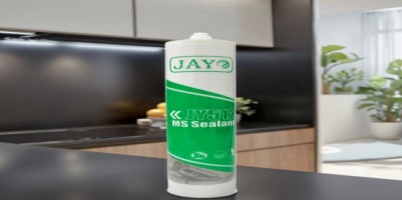
When you’re specifying materials for a project—especially in commercial construction or industrial manufacturing—“assume” is not a safe strategy. Here’s the checklist we recommend:
Check the SDS (Safety Data Sheet)
Review the TDS (Technical Data Sheet)
Ask about compliance needs
If your project has formal requirements (e.g., indoor air quality standards or low-emission building targets), confirm whether test documentation is available.
Validate by application reality
Even solvent-free products can have mild odor due to additives. If odor sensitivity is critical (hospitals, schools, residences), consider a small trial.
Solvent-free products generally reduce harsh odors and improve the user experience, especially in enclosed spaces.
For many projects, solvent-free design supports compliance targets and aligns with sustainable construction expectations.
Lower risk of shrinkage can mean fewer visual defects and more predictable sealing geometry.
MS Polymer Sealants commonly adhere to metal, glass, ceramics, wood, many plastics (depending on grade), and coated surfaces. In many cases, primerless adhesion is possible—though substrate testing is still best practice.
When joints move due to temperature changes, vibration, or settling, an elastic sealant helps maintain integrity.
In our day-to-day support for customers, we commonly see MS Polymer Sealants used for:
Construction joints (interior and exterior)
Window and door perimeter sealing
Metal panel and container sealing
HVAC sheet metal joints and equipment assembly
Automotive aftermarket sealing and bonding
Marine deck fittings and hardware sealing (grade-dependent)
General industrial bonding where flexibility matters
The solvent-free advantage becomes most visible in occupied spaces, tight production environments, and projects with strict indoor air expectations.
So, are MS Polymer Sealants solvent-free? In many cases, yes—they are commonly formulated to be solvent-free or very low in VOC, which makes them a strong option for modern construction and industrial sealing where odor control, user comfort, and sustainability goals matter. That said, “MS polymer” is a technology category, not a single formula. The responsible way to specify a solvent-free product is to verify the SDS/TDS and match the grade to your substrates, exposure conditions, and production needs.
At Guangzhou JAYO Technology Co., Ltd., we focus on helping customers select MS Polymer Sealants that perform reliably in real applications—whether you need a low-odor indoor sealant, a flexible bonding solution for assembly, or a durable joint sealant for demanding environments. If you’d like to discuss your substrate combination, movement requirements, curing conditions, or compliance expectations, we’re ready to share practical guidance and recommend suitable options based on your project goals.
1) Are MS Polymer Sealants always solvent-free?
Not always. Many are solvent-free, but formulations can vary. Always confirm using the SDS/TDS for the exact product.
2) Do solvent-free MS Polymer Sealants have zero VOC?
Often they are very low VOC, but “zero” depends on formulation and how VOC is measured. Check documented VOC values if your project requires them.
3) Are MS Polymer Sealants safe for indoor use?
They are commonly chosen for indoor applications due to lower odor and low VOC potential. Proper ventilation and safe handling practices are still recommended.
4) Can MS Polymer Sealants replace silicone or polyurethane sealants?
In many cases, yes—especially when you want a balance of adhesion, flexibility, and paintability. However, specific environments (high UV, constant immersion, specialty substrates) may still favor silicone or PU depending on the grade and requirements.


