+86-20-86215789 service@adhesive-dy.com

Views: 0 Author: Site Editor Publish Time: 2026-05-08 Origin: Site
Specifying materials for damp environments carries incredibly high stakes for modern construction projects. Structural decay, toxic black mold, and catastrophic insulation failures often result from a single bad specification. Many engineering professionals ask if PU Foam offers true moisture resistance in demanding environments. Yes, it stands as a highly moisture-resistant material. However, labeling it "100% waterproof" without context proves technically inaccurate. Its actual field performance depends entirely on internal cell structure, material density, and specific application conditions.
We designed this technical evaluation guide to help engineers, contractors, and facility managers navigate these complexities. You will learn how to spec the exact right product for your specific micro-climate. You will also discover actionable methods to avoid long-term material failure when working in wet or high-humidity environments.
Structure dictates performance: Closed-cell PU foam absorbs less than 1% water by volume; open-cell acts like a sponge and fails in damp conditions.
The R-value penalty: Just 1% moisture intrusion can spike thermal conductivity by up to 85%, making protective vapor barriers critical for insulation applications.
The curing paradox: Ambient moisture and damp surfaces actually *accelerate* the curing process of single-component PU foams, though standing water will ruin adhesion.
Long-term limits: Untreated outdoor exposure guarantees degradation via UV exposure and freeze-thaw cycles.
Procurement teams frequently confuse two distinct material terms. "Water-resistant" materials temporarily block moisture penetration. "Waterproof" materials provide an absolutely impermeable, permanent barrier against all liquids. We must frame this business problem clearly. Relying on vague marketing labels often leads to expensive structural failures down the line. You need precise definitions to make informed decisions.
Engineers use the ASTM D570 benchmark to measure actual material performance. This represents the industry-standard water absorption test. Technicians submerge a specific foam sample into water for a strict duration. They weigh the sample precisely before and after exposure. This yields an exact percentage of weight gain. This scientific standard removes subjective claims from the equation. It provides raw data you can trust.
Material reality shows a highly nuanced picture. Engineered thermoset polyurethanes undergo rigorous chemical tuning. They can achieve near-zero water absorption. Standard commercial PU Foam prevents bulk water from flowing directly through its rigid structure. It ranks as a highly moisture-resistant barrier. However, it requires additional facing to remain completely waterproof under intense hydrostatic pressure. It will not replace a dedicated marine-grade sealant for underwater submersion.
You must evaluate internal micro-structure before specifying materials for wet environments. This represents your most critical decision factor. The entire moisture-resistance profile hinges on this physical geometry.
Closed-cell variants act as a robust physical barrier. Solid plastic walls completely encapsulate tiny gas bubbles inside the core. This physical arrangement creates zero capillary action. Water physically cannot climb through the material. Typical water absorption remains below 1% by total volume. It does not swell upon moisture contact. It does not warp out of shape. It will never corrode surrounding structural metals. Ideal use cases include marine buoyancy modules, flat roofing applications, flood-resilient buildings, and underground pipe sealing.
Conversely, open-cell variants act exactly like sponges. Their micro-structure contains broken or completely missing cell walls. These voids remain open during the manufacturing expansion phase. Air flows freely through them. Unfortunately, liquid follows the exact same path. They trap liquid rapidly inside their matrix. This leads to massive added weight, total loss of structural integrity, and dangerous black mold proliferation. You must follow one hard rule. Never specify open-cell foam as a primary moisture barrier.
Performance Comparison: Micro-Structure Types | ||
Evaluation Metric | Closed-Cell Barrier | Open-Cell Structure |
|---|---|---|
Capillary Action | Zero capillary draw | High capillary draw |
Water Absorption | Less than 1% by volume | Extremely high absorption |
Mold Resistance | High resistance | Prone to fungal growth |
Primary Application | Exterior moisture barriers | Interior acoustic dampening |
Material density fundamentally changes structural performance capabilities. Higher density means thicker, more robust cell walls. This exponentially increases overall moisture resistance. It also boosts compressive strength significantly. Heavy-duty applications demand high-density formulations. Deep-sea equipment or high-stress structural joints rely entirely on these denser matrices to survive continuous pressure.
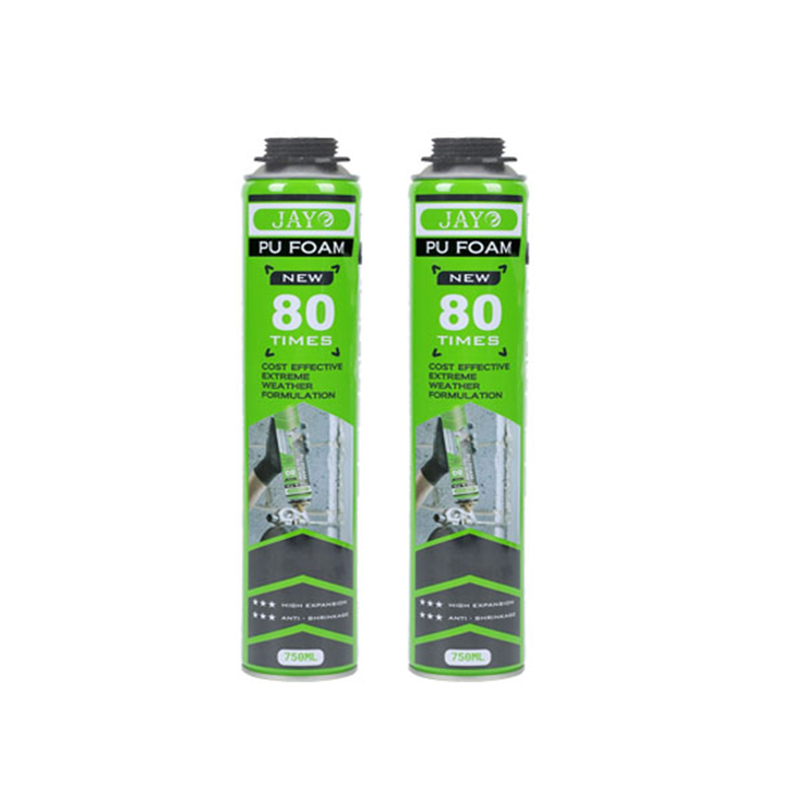
What happens when you expose the wrong polymer foam to prolonged moisture? The physical threats scale rapidly. We must conduct a clear, evidence-based risk assessment to understand the stakes.
First, consider the thermal conductivity crisis. Moisture penetration destroys baseline insulation efficiency. Water conducts heat roughly twenty-five times faster than trapped gas. When water replaces insulating gas inside a damaged cell structure, the protective R-value collapses entirely. Hard industry data shows an alarming reality.
Just 1% moisture intrusion by volume spikes thermal conductivity by approximately 85%.
A mere 2% moisture level drops the overall material R-value by 30%.
This physical degradation translates directly into massive energy losses and spiking utility bills.
HVAC systems overwork to compensate for this silent insulation failure.
Next, we must examine structural integrity loss. Degraded foam traps liquid directly against crucial building materials. This creates a perpetual damp zone inside the wall cavity. Continuous moisture attacks structural steel components. This initiates rapid oxidation and aggressive rust. Severe wet rot inevitably destroys untreated structural timber. You face catastrophic physical failures if you ignore these elemental dynamics.
Many construction professionals hold a common misconception. They mistakenly believe successful application requires a perfectly dry environment. We must address this counter-intuitive truth. Moisture is not always the enemy during installation.
Single-component formulations actually rely entirely on ambient humidity. This moisture helps them cure properly and form a rigid structure. They utilize moisture-curing polyurethane chemistry. Isocyanate groups react directly with ambient water molecules. This chemical reaction releases carbon dioxide gas. The gas expands the material outward. Simultaneously, the polymer chains cross-link to form a solid matrix. Dry air actually starves this necessary reaction.
Follow these specific application guidelines for optimal results:
Damp vs. Wet: Lightly misting your substrate improves adhesion significantly. It also ensures proper cell structure formation across bare concrete or timber. You actively want a slightly damp surface.
The Failure Point: Never apply product into pooling water. Standing water ruins everything. The material loses tack immediately, fails to expand, and sloughs off the substrate.
High-Humidity Environments: You will experience much faster curing times here. However, this dynamic carries a severe risk of "over-expansion". You might easily warp delicate door and window frames. Always specify a low-expansion variant in highly humid conditions.
We must protect the initial installation investment over a ten-to-twenty-year lifecycle. Untreated outdoor exposure guarantees gradual material degradation. You cannot leave bare foam exposed to the elements. Three primary killers destroy unprotected materials over time.
Ultraviolet radiation poses a massive threat. Sunlight attacks the internal molecular bonds. This photon energy causes rapid surface fading and severe brittleness. The foam surface eventually turns into a yellow dust. This physical breakdown destroys the vital closed-cell seal.
Freeze-thaw cycles create immense mechanical stress. Trapped surface moisture expands by approximately nine percent when frozen. This microscopic expansion shatters the fragile outer cell walls. Repeated cycles grind the outer layers down over sequential winters.
Submersion without protection guarantees eventual failure. Continuous hydrostatic pressure will ultimately penetrate any un-faced core. Water pressure slowly forces liquid through microscopic imperfections over years of exposure.
You must specify proper protective mitigations from day one. We strongly recommend high-performance vapor barriers. The water vapor diffusion resistance factor (μ) dictates overall long-term performance. You need the right facing for the right environment.
Vapor Diffusion Resistance Factor (μ) Chart | ||
Surface Coating / Material Facing | Resistance Factor (μ) | Expected Protection Level |
|---|---|---|
Bare Sprayed Foam Surface | 30 - 50 | Minimal / Strictly short-term |
Standard Elastomeric Paint | 1,500 - 3,000 | Moderate UV / Rain protection |
Embossed Aluminum Foil (40 μm) | > 89,900 | Highly robust vapor barrier |
Solid Metal Facing (>50 μm) | Infinite (∞) | Absolute permanent barrier |
Closed-cell formulations offer elite moisture resistance for demanding applications. They prevent bulk water intrusion effectively. However, they remain just one component of a broader waterproofing system. They are not a standalone magic bullet. You must treat them as part of a comprehensive design strategy.
Follow these actionable next steps to shortlist your ideal sealing solution:
Evaluate your specific micro-climate before purchasing materials. You need to know your expected humidity levels.
Specify standard closed-cell options for interior areas seeing only occasional dampness.
Mandate high-density formulations for prolonged outdoor exposure or high-pressure environments.
Always apply an appropriate elastomeric coating or metal facing to block UV rays and freeze-thaw damage.
A: Short-term (under 24 hours in rain), yes—water can be wiped off. Long-term, no. They must be covered to prevent UV and freeze-thaw damage.
A: Cutting breaks only the outermost layer of cells. Because the internal cells remain individually sealed (in closed-cell variants), moisture will only penetrate the microscopic surface layer.
A: No. High-quality, properly cured closed-cell PU foam does not oxidize or hold water against metal. It actually forms an airtight seal that prevents humid air from reaching the metal substrate.
A: Acetone-based cleaners dissolve fresh foam. Once cured by ambient moisture, it becomes highly chemical-resistant and must be mechanically removed (scraped/cut).


