+86-20-86215789 service@adhesive-dy.com

Views: 0 Author: Site Editor Publish Time: 2026-02-11 Origin: Site
Silicone sealant is one of the most widely used sealing materials across construction, manufacturing, electronics, and industrial assembly. From sealing glass and aluminum frames to bonding components exposed to moisture, heat, or vibration, silicone sealant is valued for its flexibility, durability, and resistance to environmental stress.
However, one of the most common—and most misunderstood—questions we encounter in industrial and commercial projects is: how long does silicone sealant actually take to cure?
From a production and application standpoint, curing time is not just a technical detail. It directly affects workflow scheduling, assembly speed, quality control, and long-term performance. Applying load too early can compromise adhesion, while unnecessary delays can slow down production lines and installation progress.
In this article, we take a practical, industry-focused look at silicone sealant curing time. We explain how curing works, what factors influence it, how long it takes under real working conditions, and how to manage curing efficiently in factory and site applications. Our goal is to help you make informed decisions and avoid costly mistakes when using silicone sealant in professional environments.
Before discussing timelines, it is important to distinguish between surface drying and full curing.
Silicone sealant cures through a chemical reaction with moisture in the air. As curing progresses, the material transforms from a paste into an elastic, rubber-like solid.
There are three stages in this process:
Skin Formation (Tack-Free Time)
The surface of the sealant forms a thin skin. It may feel dry to the touch, but the interior is still uncured.
Initial Cure
The sealant begins curing beneath the surface and develops basic mechanical strength.
Full Cure
The sealant has completely cured through its entire thickness and reaches its designed performance in terms of elasticity, adhesion, and resistance.
Many application problems occur because users mistake surface dryness for full curing.
Under standard laboratory conditions (23°C / 73°F, 50% relative humidity), most neutral-cure and acetoxy silicone sealants follow a similar curing pattern.
Curing Stage | Typical Time |
Skin formation | 5–15 minutes |
Tack-free time | 20–40 minutes |
Cure rate | ~2–3 mm per 24 hours |
Full cure (thin bead) | 24 hours |
Full cure (thick joint) | 3–7 days |
Key point: Silicone sealant cures from the outside inward. Thicker joints take significantly longer to cure completely.
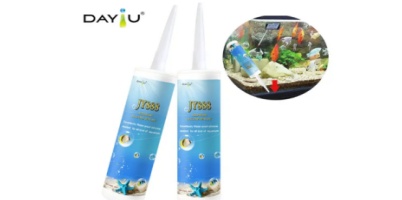
In real-world factory, construction, and installation environments, silicone sealant curing time rarely follows an ideal laboratory timeline. Variations in materials, climate, and application methods all influence how quickly and reliably a sealant cures. Understanding these factors is essential for planning production schedules, avoiding premature failures, and ensuring long-term sealing performance.
Below are the key factors that directly affect silicone sealant curing time in industrial and site conditions.
Different silicone sealants cure through different chemical mechanisms, which results in varying curing speeds and compatibility profiles.
Sealant Type | Curing Characteristics |
Acetoxy cure | Faster surface cure, strong vinegar-like odor |
Neutral cure (oxime / alkoxy) | Slower curing, material-friendly |
High-temperature silicone | Often slower curing due to formulation |
Fast-cure industrial silicone | Accelerated curing rate |
Acetoxy-cure silicones release acetic acid during curing, which allows for fast skin formation but can corrode metals and damage sensitive components. For this reason, industrial applications typically favor neutral-cure silicone sealants, which are non-corrosive and compatible with metals, electronics, coated surfaces, and composite materials.
Fast-cure formulations are useful when production speed is critical, but they still require proper environmental conditions to reach full cure.
Silicone sealants cure from the outside inward, reacting with moisture in the air. As a result, curing speed is directly proportional to bead thickness.
Bead Thickness | Approximate Full Cure Time |
2–3 mm | ~24 hours |
5 mm | 48–72 hours |
10 mm | 5–7 days |
In production environments, controlling bead size is one of the most effective ways to manage curing schedules. Excessively thick beads may appear cured on the surface while remaining soft internally, leading to adhesion loss, deformation, or delayed failure under stress.
Designing joints to the recommended depth-to-width ratios helps ensure uniform curing and predictable performance.
Temperature has a significant impact on silicone curing reactions.
Temperature Range | Effect on Curing |
Below 5°C | Very slow or stalled |
10–20°C | Slower than standard |
20–30°C | Optimal curing range |
Above 35°C | Faster skinning, risk of surface defects |
At low temperatures, curing can slow dramatically or stop altogether, especially in unheated factories or winter job sites. Conversely, very high temperatures may cause rapid surface skinning while trapping uncured material beneath.
For consistent results, factories and job sites should avoid applying silicone sealant in cold, unconditioned environments without climate control.
Silicone sealants cure by reacting with moisture in the air, making humidity a critical factor.
Humidity Level | Curing Effect |
Below 30% RH | Slow curing |
40–60% RH | Ideal |
Above 80% RH | Fast surface cure, risk of bubbling |
Low humidity environments—such as air-conditioned factories or dry climates—can significantly delay curing. On the other hand, very high humidity may cause surface bubbling, foaming, or uneven texture.
Balanced humidity supports uniform curing without compromising surface quality or internal structure.
The type of substrate affects how moisture interacts with the sealant.
Porous materials (concrete, stone, wood):
Allow moisture exchange → generally faster curing
Non-porous materials (glass, aluminum, stainless steel):
Limited moisture availability → slower curing
This distinction is especially important in glazing systems, façade installations, and electronics housings, where non-porous substrates dominate and curing times are often underestimated.
Different applications require different curing benchmarks.
Application Scenario | Recommended Waiting Time |
Light handling | After tack-free stage |
Water exposure | Minimum 24 hours |
Mechanical stress | After full cure |
Structural sealing | 3–7 days (depending on thickness) |
A common mistake is assuming that “dry to the touch” means fully cured. In reality, internal curing may take several days, especially in thick joints or low-humidity conditions.
Rushing this process is a frequent cause of premature seal failure.
From experience in industrial applications, the following errors are most common:
Applying overly thick beads
Using silicone in cold or extremely dry environments
Covering uncured sealant with tape or film
Exposing sealant to water too early
Assuming surface dryness equals full cure
Avoiding these mistakes significantly improves curing consistency and long-term sealing reliability.
While silicone sealant curing cannot be aggressively accelerated without risking performance, several controlled measures can significantly optimize curing conditions and reduce unnecessary delays. Maintaining an ambient temperature between 20–30°C is one of the most effective ways to support consistent chemical reactions. Moderate humidity levels are equally important, as silicone relies on atmospheric moisture to cure properly.
Using thinner, well-controlled bead profiles allows moisture to penetrate more evenly, shortening overall curing time without compromising internal strength. In applications where speed is critical, fast-cure silicone formulations can be selected, provided they are compatible with the substrate and service environment. Gentle airflow can also assist curing by stabilizing temperature and humidity, but direct strong airflow should be avoided.
It is important to note that heat guns, infrared heaters, or forced drying methods are not recommended. These methods often cause rapid surface skinning while leaving uncured material beneath, leading to internal weakness, adhesion loss, or premature failure.
Not all silicone sealants are designed for the same curing behavior. Selecting the right formulation for your environment and application is just as important as knowing how long it cures.
At Guangzhou JAYO Technology Co., Ltd., we focus on supplying silicone sealant solutions engineered for stable curing, consistent performance, and compatibility with industrial production requirements. Our technical team works closely with customers to match curing behavior with real application conditions—whether in construction, electronics, or manufacturing.
If you are planning a project or production line that relies on silicone sealant, choosing the right product from the start helps avoid delays, rework, and performance issues.
Most silicone sealants cure at a rate of about 2–3 mm per 24 hours. Full curing typically takes 24 hours for thin beads and up to 7 days for thicker joints.
No. Silicone sealant requires moisture from the air to cure. In sealed or oxygen-free environments, curing will be extremely slow or incomplete.
No. Silicone sealant should not be exposed to water until at least 24 hours after application, and preferably after full curing.
High-quality fast-cure silicone sealants are designed to maintain performance while reducing curing time, provided they are applied under recommended conditions.


