+86-20-86215789 service@adhesive-dy.com

Views: 0 Author: Site Editor Publish Time: 2026-02-13 Origin: Site
PU foam is widely used across construction, insulation, sealing, and industrial assembly projects due to its excellent filling and bonding performance. One of the most frequently asked questions we receive from engineers, contractors, and industrial buyers is simple but important: does PU foam expand after application?
The short answer is yes—PU foam does expand after application, and this expansion is one of its most valuable characteristics. However, understanding how, how much, and under what conditions PU foam expands is essential for achieving precise, reliable results.
In this article, we explain how PU foam expansion works, what factors influence it, how to control it during application, and why proper selection matters for different industrial and construction scenarios. Drawing on our production and application experience, we aim to help users apply PU foam more effectively and confidently.
PU foam, short for polyurethane foam, is a reactive polymer material formed when polyol and isocyanate components chemically react. During application, this reaction generates gas, causing the material to expand and cure into a lightweight yet durable foam structure.
PU foam is commonly supplied as:
One-component (moisture-curing) spray foam
Two-component (chemical reaction) foam systems
Its ability to expand, adhere, insulate, and seal makes PU foam a versatile solution for both precision sealing and large-gap filling.
Yes, PU foam expands after application, and this expansion occurs in several distinct stages.
Initial Dispensing
PU foam is released as a liquid or semi-liquid material.
Chemical Reaction Begins
The foam reacts with moisture in the air or with a second component, producing gas.
Expansion Phase
The generated gas causes the foam to expand, filling gaps, cavities, or voids.
Curing and Hardening
The foam solidifies, forming a stable cellular structure.
This expansion allows PU foam to adapt to irregular shapes and create airtight or watertight seals that rigid materials cannot achieve.
Not all PU foams expand in the same way. Expansion behavior varies significantly depending on formulation, curing mechanism, and intended application. Selecting the correct type of PU foam is therefore critical not only for performance, but also for installation safety, dimensional accuracy, and long-term durability.
From a practical standpoint, PU foams used in construction and industrial environments can be broadly categorized by their expansion characteristics.
High-expansion PU foam is formulated to increase dramatically in volume after application. In some cases, it can expand several times its original dispensed size, allowing it to fill large or irregular cavities efficiently.
Typical uses include:
Filling large voids and gaps in construction structures
Thermal and acoustic insulation of wall cavities
Sealing around pipes, ducts, and service penetrations
Key characteristics:
Strong filling capacity that adapts to complex shapes
Rapid expansion driven by chemical reaction and gas generation
Requires careful control to avoid overfilling or excessive pressure
Because of its aggressive expansion behavior, high-expansion PU foam is best suited for areas where surrounding materials are rigid and able to withstand expansion pressure. When applied incorrectly—such as near lightweight frames or precision assemblies—it may exert unwanted force, leading to distortion or misalignment. For this reason, controlled application and proper gap assessment are essential.
Low-expansion PU foam is engineered to expand in a controlled and predictable manner. Rather than maximizing volume increase, this type focuses on dimensional stability and precision.
Typical uses include:
Door and window installation
Precision gap sealing around frames
Applications near delicate or load-sensitive structures
Key characteristics:
Controlled expansion with limited pressure build-up
Reduced stress on surrounding materials
Higher dimensional stability after curing
Low-expansion PU foam is especially important in installations where maintaining alignment and clearances is critical. For example, window and door frames require sealing materials that provide insulation and airtightness without warping the structure. In such cases, low-expansion PU foam delivers reliable sealing performance while preserving structural accuracy.
Two-component PU foam systems rely on the chemical reaction between two mixed components rather than ambient moisture. This allows for highly controlled expansion and curing behavior.
Typical uses include:
Industrial and structural applications
Large-scale insulation projects
Applications requiring predictable foam density
Key characteristics:
Adjustable and predictable expansion
Faster and more uniform curing
Less dependence on environmental moisture
Two-component systems are commonly used in industrial settings where consistency and repeatability are required across large surfaces or production volumes.
PU Foam Type | Expansion Rate | Typical Applications |
High-expansion PU foam | High (multiple times original volume) | Insulation, large cavities |
Low-expansion PU foam | Low and controlled | Windows, doors, precision sealing |
Two-component PU foam | Adjustable, predictable | Industrial and structural applications |
PU foam expansion is influenced by several external and material-related factors. Understanding these variables allows users to better predict foam behavior and achieve consistent application results.
Moisture plays a critical role in the expansion of one-component PU foam. The curing reaction depends on moisture in the surrounding air or substrate.
Higher humidity generally results in faster and greater expansion
Dry environments can slow reaction speed and limit expansion
In low-humidity conditions, lightly misting surfaces with water before application can help ensure uniform expansion and proper curing. However, excessive moisture should be avoided, as it may negatively affect foam structure.
Temperature directly affects both reaction speed and foam cell structure.
Ideal application range: 5°C–30°C
Low temperatures slow chemical reactions, reducing expansion and curing speed
High temperatures accelerate expansion and curing, sometimes too rapidly
Applying PU foam outside recommended temperature ranges may lead to uneven expansion, reduced adhesion, or compromised mechanical performance. Consistent temperature control improves predictability and final foam quality.
The amount of foam applied at one time has a significant impact on expansion behavior.
Applying too much foam at once can cause:
Excessive and uncontrolled expansion
Formation of internal voids or weak cells
Incomplete curing in the foam core
For deep cavities or large gaps, a layered application approach is recommended. Allowing partial expansion and curing between layers ensures better structural integrity and dimensional control.
Different PU foam formulations are engineered for specific expansion profiles, densities, and curing speeds. Industrial-grade PU foam products typically offer more consistent and predictable expansion behavior compared to generic or consumer-grade options.
Selecting a formulation designed for the intended application environment—whether construction, industrial assembly, or insulation—helps ensure reliable performance and minimizes installation risks.
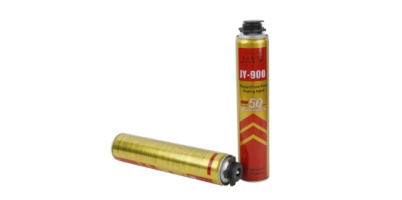
Proper control ensures safety, performance, and clean installation.
Apply foam gradually, filling only 30–50% of the gap
Allow time for expansion before adding additional layers
Use low-expansion foam near frames or delicate materials
Trim cured foam rather than overfilling
Overfilling cavities
Applying foam in extremely dry or cold conditions
Using high-expansion foam where precision is required
PU foam expansion enables a wide range of applications:
Door and window installation
Wall and roof insulation
Expansion joint sealing
Equipment vibration damping
Enclosure sealing
Structural gap filling
Pipe and duct sealing
Cable penetration insulation
Noise and thermal control
The expansion property of PU foam delivers several performance benefits:
Excellent gap-filling capability
Strong adhesion to multiple substrates
Effective thermal and acoustic insulation
Improved energy efficiency
Reduced material waste
These advantages explain why PU foam remains a preferred solution in both industrial and construction environments.
Using the wrong PU foam type can result in:
Structural distortion
Reduced insulation performance
Increased rework costs
Selecting the correct expansion profile ensures reliable, repeatable outcomes—especially in professional and industrial settings.
At Guangzhou JAYO Technology Co., Ltd., we focus on providing PU foam solutions engineered for controlled expansion, consistent curing, and application-specific performance. Our experience across construction and industrial sectors allows us to support customers in selecting the most suitable foam for their projects.
So, does PU foam expand after application? Absolutely—and this expansion is fundamental to its effectiveness. When properly selected and applied, expanding PU foam provides reliable sealing, insulation, and structural support across a wide range of applications.
Understanding expansion behavior, environmental factors, and correct application techniques is the key to achieving professional results. With the right PU foam solution, expansion becomes a controlled advantage rather than a challenge.
If you are evaluating PU foam for construction or industrial use, learning more about application-specific formulations and expansion control can significantly improve project outcomes. We are always ready to share technical insight and practical experience to support your needs.
1. How much does PU foam expand after application?
Expansion depends on the formulation. High-expansion foams can expand several times their original volume, while low-expansion foams expand in a controlled manner.
2. Can PU foam expansion damage surrounding materials?
Yes, if high-expansion foam is used incorrectly. Low-expansion PU foam is recommended near doors, windows, and delicate structures.
3. Does PU foam stop expanding once it cures?
Yes. Expansion occurs during the reaction phase. Once fully cured, PU foam becomes dimensionally stable.
4. Can PU foam expansion be slowed down?
Lower temperatures and reduced moisture slow expansion, but application conditions should remain within recommended ranges for best performance.


